Here's info about high-definition video disc ("HDVD") recordings of opera, ballet, classical music, plays, performance art, and paintings. On our home page you see the latest stories. Go to the Alphalist (left navigation bar) to see our archives with hard-to-find critical reports on hundreds of HDVDs. Pick the best titles for your excelsisphere.
June 1, 2024. After 14 years of working as weekend warrior on this website (2008 to 2022), my day job forced me to pause this project until I can retire and get back into my home theater. The website now has pretty solid coverage of Blu-ray discs of fine arts titles published thru the end of 2022. We remain the only website that slices the entertainment that way (best of the best). Our coverage is spotty for 2023 and nil for 2024.
After 2022, the publishers of fine-arts Blu-ray titles slowed down. The industry has covered most of the best stuff. For example, we now have reviews on 10 versions of Swan Lake from good ballet houses.
During the last 14 years we screened 2000+ Blu-ray title fine-arts recordings that might meet our high standards. We excluded nearly a third of these titles as “impostors” mostly for poor content or quality. We now have about 1450+ line items on the Alphalist. And we also have a list of titles we excluded for poor quality. And see our Special Stories for special recommendations about the best titles.
Finally, here a tip about reading our home page. Full reviews are at the top. The latest items are at the bottom. The current latest new item is the Bruckner 11 Box Set with the Vienna Phil conducted by Thielemann.
Hank McFadyen
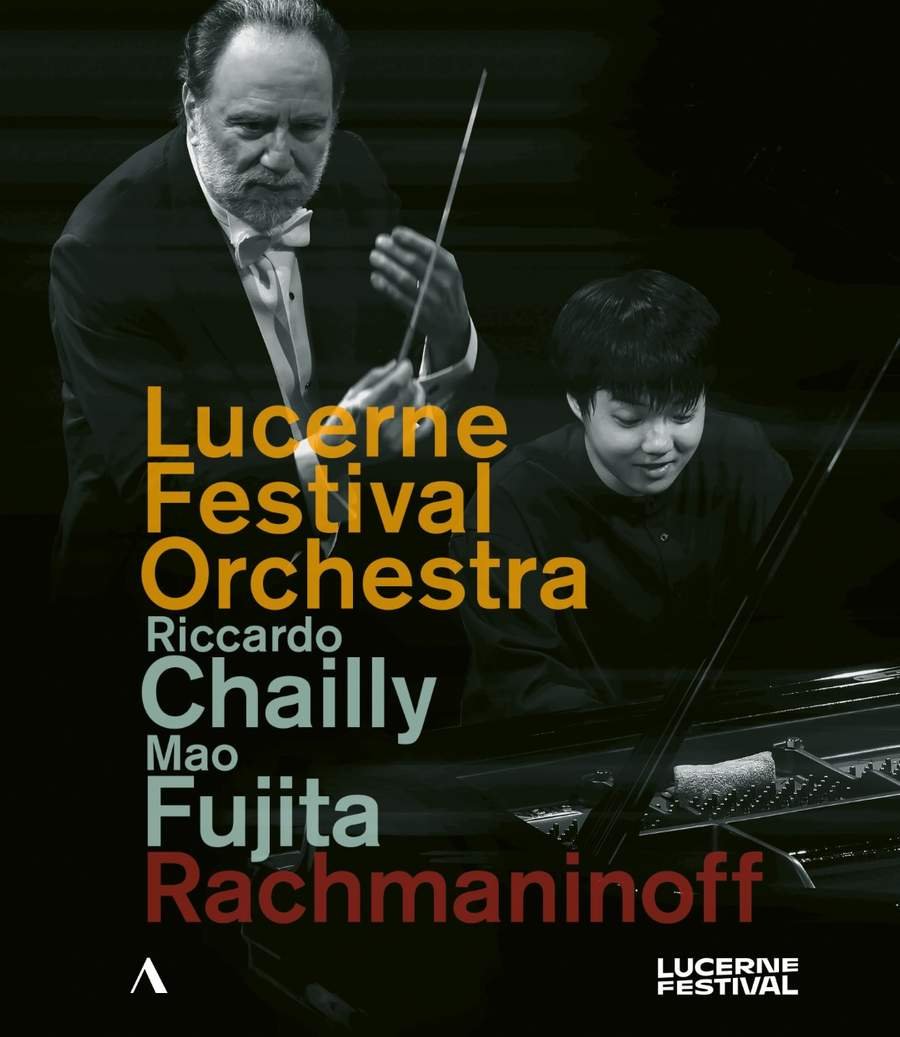
Rachmaninoff Piano Concerto No. 2 and Symphony No. 2 concert. Performed 2022 at the Concert Hall of KKL Luzern as part of the Lucerne Festival. Riccardo Chailly conducts the Lucerne Festival Orchestra. Features pianist Mao Fujita. The full program is as follows:
Piano Concerto No. 2
Rachmaninoff arrangement of Gavotte from Partita No. 3 for solo violin by Johann Sebastian Bach (encore)
Symphony No. 2
Directed for TV by Ute Feudel; produced by Paul Smaczny; Director of Photography was Nyika Jancsó. Released 2022, disc has 5.1 dts-HD Master Audio sound. Grade: A for the piano concerto and B for the symphony.
Fujtia, about 24 at the time, is excruciatingly polite and self-effacing. He opened this show before a festival audience with a lot of empty seats. When he first appeared I wondered: can he really do this? But when he plays, he has both brilliant skill and a magnetic personality: half imp of the perverse and half kid in a kandy store. You become convinced that what you are seeing is the greatest thing that ever happened to him. The audience slurped him up and rewarded him with an instant standing ovation. Probably none of this would come across from a CD—hurry for Blu-ray!
In the symphony performance it was fun to see my two favorite brass players sitting side by side (Reinhold Friedrich on trumpet and Jörgen van Rijen on trombone) among other familiar faces. Something else you can’t get from a CD.
But this performance of the symphony suffers from dvditis, that evil tendency to chop the video up into (1) too many short clips with too many closeups of the musicians and the conductor and (2) not enough long-range shots of sections and the whole orchestra.
The industry is still too bogged down with old DVD habits. But the time is coming when Blu-ray will finally take over the market and DVD will be recognized as obsolete. Then the industry will have to shoot all the orchestral classical canon over again for viewing with high-def TVs. So for dvditis I reduce the grade on the concerto from A+ to A and the grade on the symphony from A+ to B.
I decided not to include a bunch of screen shots with this story as I found a couple of videos that do this well enough. One of them even offers free screening of the entire title (at least for a while).
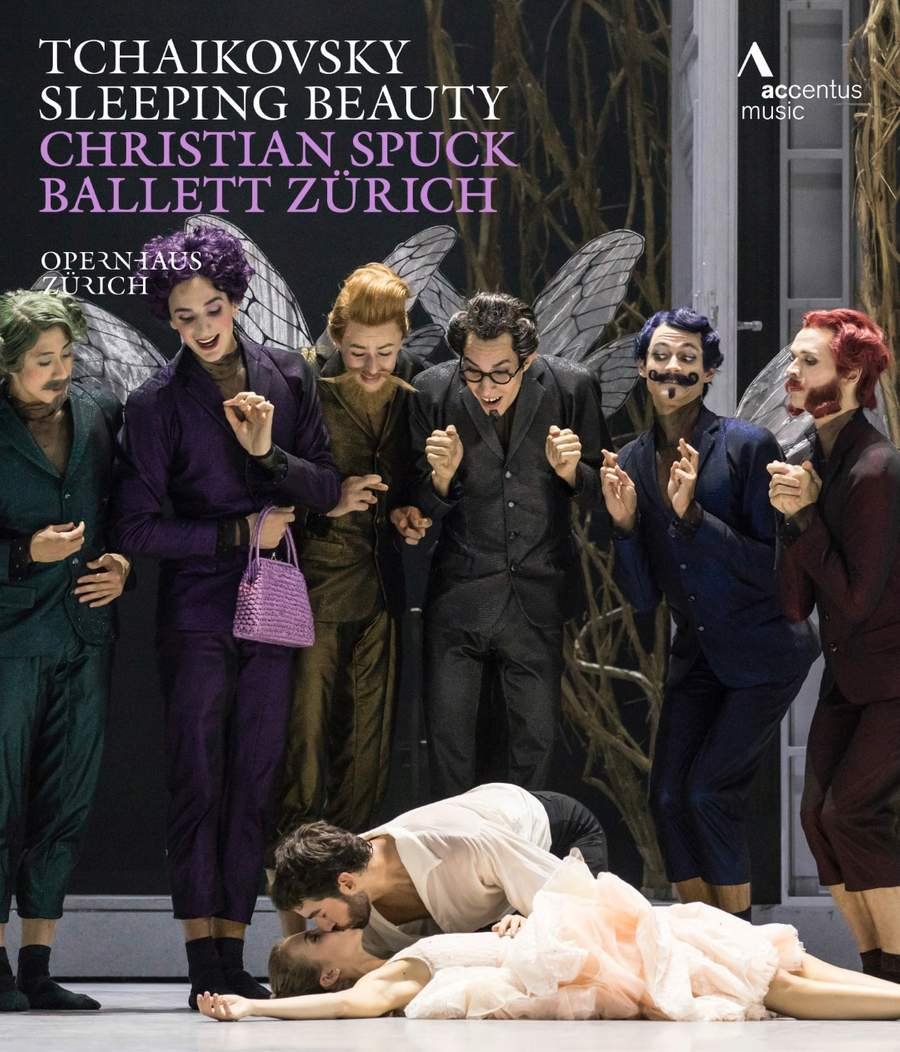
Sleeping Beauty ballet. Music by Tchaikovsky. Directed and choreographed in 2022 by Christian Spuck at Opernhaus Zürich. Stars Michelle Willems (Aurora), Esteban Berlanga (Prince Désiré), Lucas Valente (King), Inna Bilash (Queen), William Moore (Carabosse), Jan Casier (Lilac Fairy), Cohen Aitchison-Dugas, Matthew Bates, Dominik White Slavkovshý, Wei Chen, and Mark Geilings (Faries) as well as many other dancers from Ballett Zürich and the Junior Ballett. Robertos Šervenikas conducts the Philharmonia Zürich. Set design by Rufus Didwiszus; costume design by Buki Shiff; lighting design by Martin Gebhardt; dramaturgy by Michael Küster and Christian Spuck. Directed for TV by Michael Beyer; produced by Paul Smaczny. Released 2023, disc has 5.1 dts-HD Master Audio sound. Grade: A- with the ‽ designation.
Spuck has been an important choreographer, primarily in Stuttgart and Zürich, since 1996. We have reviewed 5 ballet HDVDs from Spuck on this website mostly from his productions for Ballet Zürich. His Sleeping Beauty premiered in 2020, but closed during the Covid-19 pandemic. The show on this disc was recorded in June 2022. Spuck recently became artistic director of the Staatsballett Berlin for the 2023/24 season, where he will serve the Deutsche Oper Berlin, the Komische Oper Berlin, and the Staatsoper Unter den Linden.
Spuck likes to inject classical ballet and music titles with jarring psychological twists. A bizarre twist here is his creation of 3 mother/father time characters who are always available as the set turns. They have long hair and skirts like women but have beards. They do little other than sit, appear weird, and sometimes slowly look at their oversize watches . . .
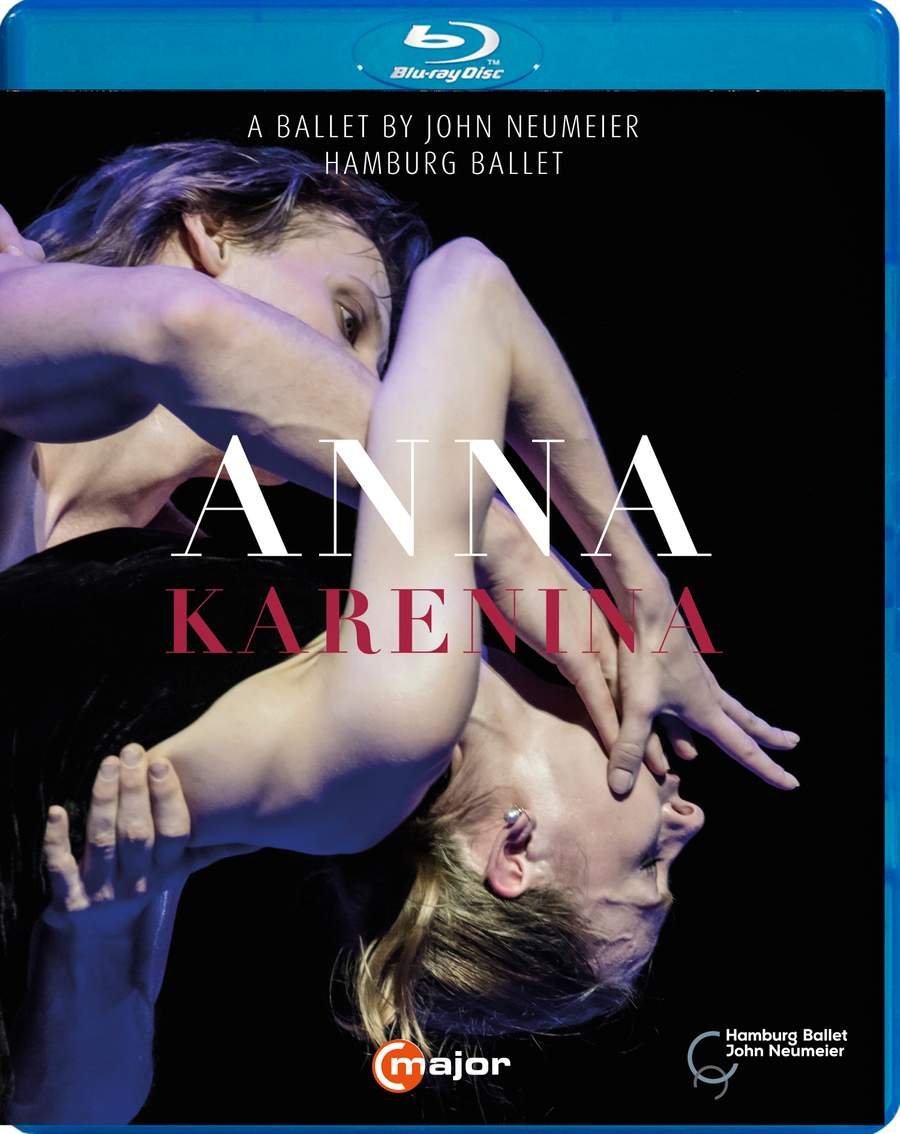
Anna Karenina ballet. Choreographed 2017 by John Neumeier to music from Tchaikovsky, Alfred Schnittke, and Cat Stevens/Yusuf Islam. Inspired by the Tolstoy novel but set in modern times. Recorded 2022 at the Hamburg State Opera. Stars Anna Laudere (Anna Karenina); Edvin Revazov (Alexie Vronski); Ivan Urban (Alexie Karenin); Aleix Martínez (Levin); Emilie Mazoń (Kitty); Marià Huguet (Seryozha); Karen Azatyan (A Muzhik); Patricia Friza (Dolly); and Florian Pohl (Stiva). Nathan Brock conducts the Hamburg State Philharmonic Orchestra. Staging, sets, costumes, and lighting by John Neumeier; Anna Karenina dressed by Akris-Albert Kriemler; video and graphic designs by Kiran West; assistant set designer was Heinrich Tröger. Directed for TV by Myriam Hoyer. Especially good bonus feature. Ballet runs 225 minutes and Bonus runs 67 minutes. Released 2023, disc has 5.1 dts-HD Master Audio sound. Grade: A+.
Forget about our usual desire to see long ballet clips showing the whole stage and whole bodies of the dancers. Here Neumeier and film director Myriam Hoyer set out to make a motion picture to be shown first on TV. This show has many details that will please those who know Tolstoy’s novel or do their homework. If you get this under control, you can take reading Anna off your bucket list and move on to something like Brothers Karamazov . . .
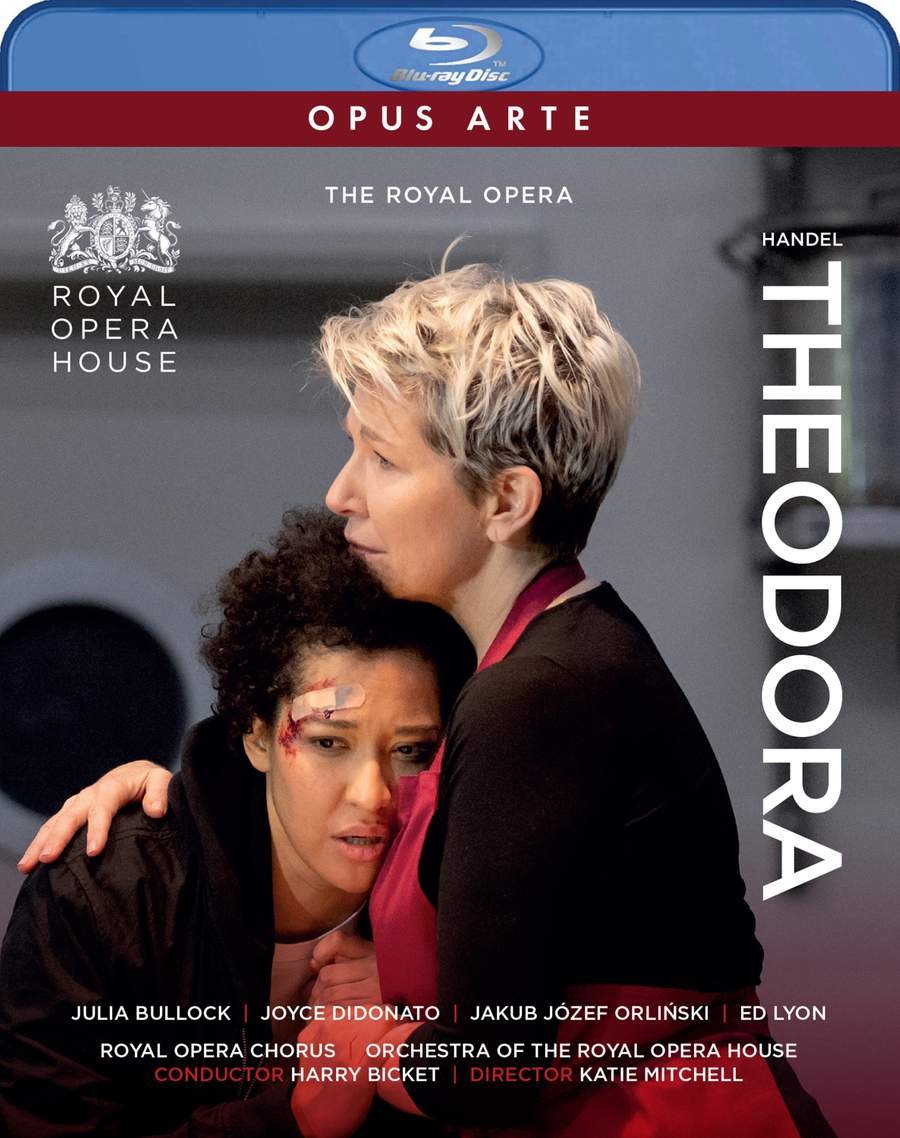
Handel Theodora opera to libretto by Thomas Morell. Directed 2022 by Katie Mitchell at the Royal Opera. Stars Julia Bullock (Theodora), Jakub Józef Orliński (Didymus), Ed Lyon (Septimius), Gyula Orendt (Valens), Joyce DiDonato (Irene), and Thando Mjandana (Marcus). Harry Bicket conducts the Orchestra of the Royal Opera and the Royal Opera Chorus (Chorus Master William Spaulding). Actors/dancers are Holly Weston and Kelly Vee. Other actors are Aquira Bailey-Browne, Ben Clifford, Sarah Northgraves, and David Rawlins. Set design by Chloe Lamford; costume design by Sussie Juhlin-Wallén; lighting design by James Farncombe; movement direction by Sarita Piotrowski. Directed for TV by Peter Jones. Sung in English. Released 2011, disc has 5.1 dts-HD Master Audio sound. Grade: C
Theodora is usually considered an oratorio or a dramatic oratorio. But if you bring in Katie Mitchell, it’s going to be an opera. Mitchell’s modern-times overlay was controversial, but most critics who saw this live were ecstatic about the cast and the music. Handel wrote an Organ Concerto in G Minor for performance with Theodora. The organ piece was usually performed by Handel as a bonus extra, perhaps at an intermission. The Royal Opera here cuts the Organ Concerto.
Katie Mitchell likes to divide her stage into little boxes that get shifted around . . .
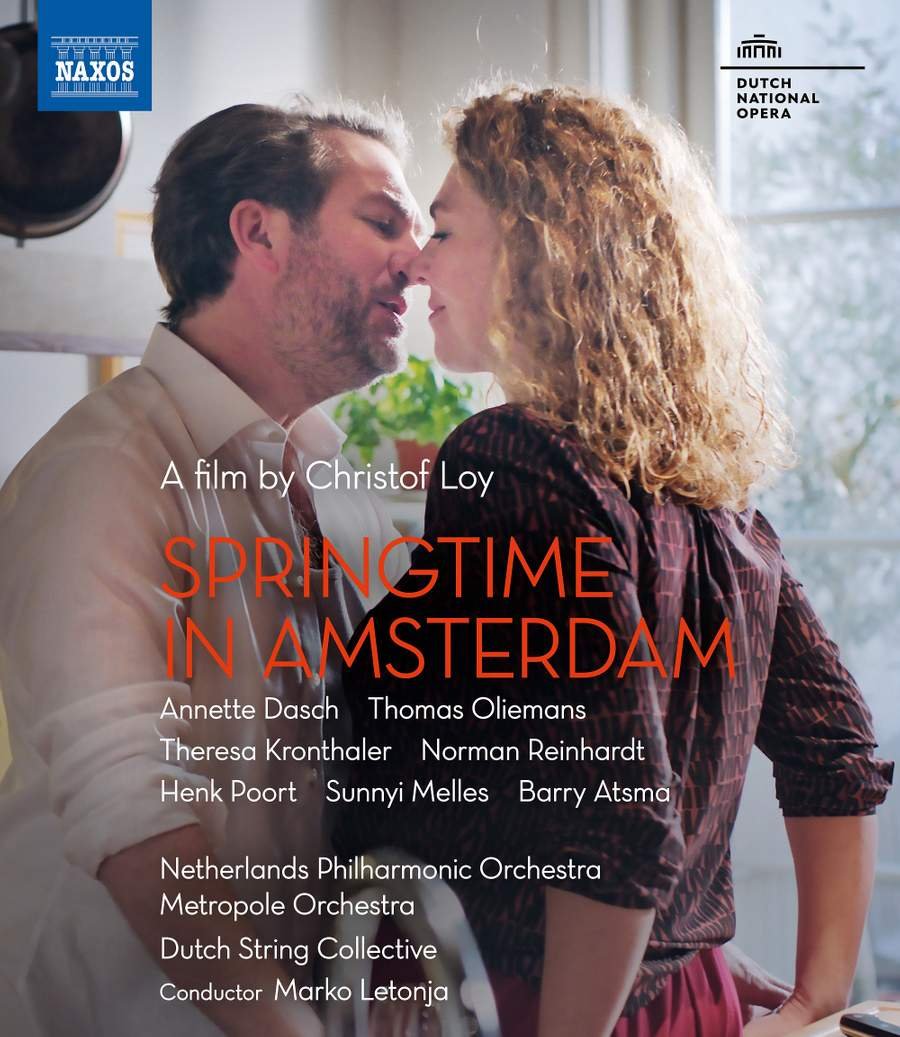
Springtime in Amsterdam is a unique performance art piece recorded in 2021-2022 as a motion picture. The book is by Christof Loy, who dreams up a complex story built on 18 pieces of popular music from operettas, musical theater, and national song books. Naxos calls this “joyful”, and there is much humor here. But the overwhelming moral weight of the project is our concern for the fate of the abused woman Theresa. Her pain is excruciating, and this is underscored by Loy’s ironic use of relatively lightweight music. Seven opera singers created roles in this production. Loy rewards six of them by naming each of their characters in the book after the singers who created the roles: Annette Dasch is Annette; Thomas Oliemans is Thomas; Theresa Kronthaler is Theresa; Norman Reinhardt is Norman; Henk Poort is Henk; Sunnyi Melles is Sunnyi. The small role of Matthias is played by Barry Atsma. Loy requires all his singers to be ready to sing, speak, dance, and act at movie-star levels. It also seems that half the artists in Amsterdam got into this somehow, and there are exhaustive credits for all of them in the keepcase booklet. Marko Letonja directed the Chorus of the Dutch National Opera, the Netherlands Philharmonic Orchestra, the Metropole Orchestra, and the Dutch String Collective. The motion picture was directed by Loy. Stef Kwinten was director of photography. Sung in Dutch, English, and German. Released 2023, disc has 5.1 dts-HD Master Audio sound. Grade: A+ with the ‽ and 💓 designations. . .
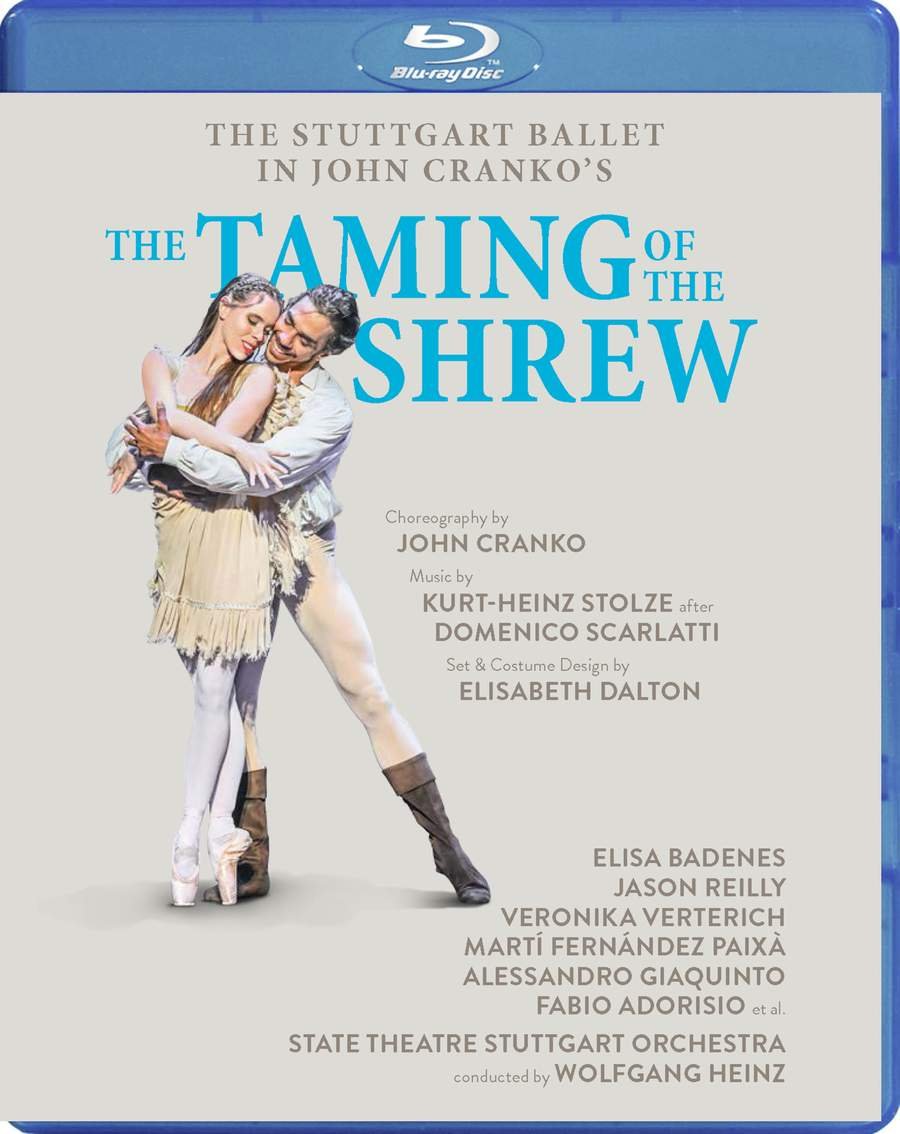
The Taming of the Shrew ballet inspired by the Shakespeare play. Music by Kurt-Heinz Stolze after Domenico Scarlatti. John Cranko choreography (created 1969) performed 2022 by the Stuttgart Ballet at the Stuttgart State Theatre. Stars Elisa Badenes (Katherina), Jason Reilly (Petruchio), Veronika Verterich (Bianca), Martí Fernández Paixà (Lucentio), Alessandro Giaquinto (Gremio), Fabio Adorisio (Hortensio), Angelina Zuccarini and Daiana Ruiz (Two Ladies of the Street), Rolando D’Alesio (Battista), and Matteo Crockard-Villa (Innkeeper/Priest). Wolfgang Heinz conducts the Orchestra of the State Theatre Stuttgart. Set and costume design by Elizabeth Dalton; artistic supervision by Reid Anderson. Disc includes an especially nice bonus extra with helpful discussion by members of the production team. Directed for TV by Michael Beyer. Released 2023, disc has 5.1 dts-HD Master Audio sound. Grade: A+
This is a sparkingly new production of one of the rarest creatures in the garden of the arts—a comic classical ballet. It follows closely the basic structure of Shakespeare’s war of wits and barbed tongues. But how do you do this with artists who don’t speak and women on point? Well, with brilliant acting, clever staging and props, vaudeville-style physical comedy, and every other trick in the book including even a juggling act with a lute . . .
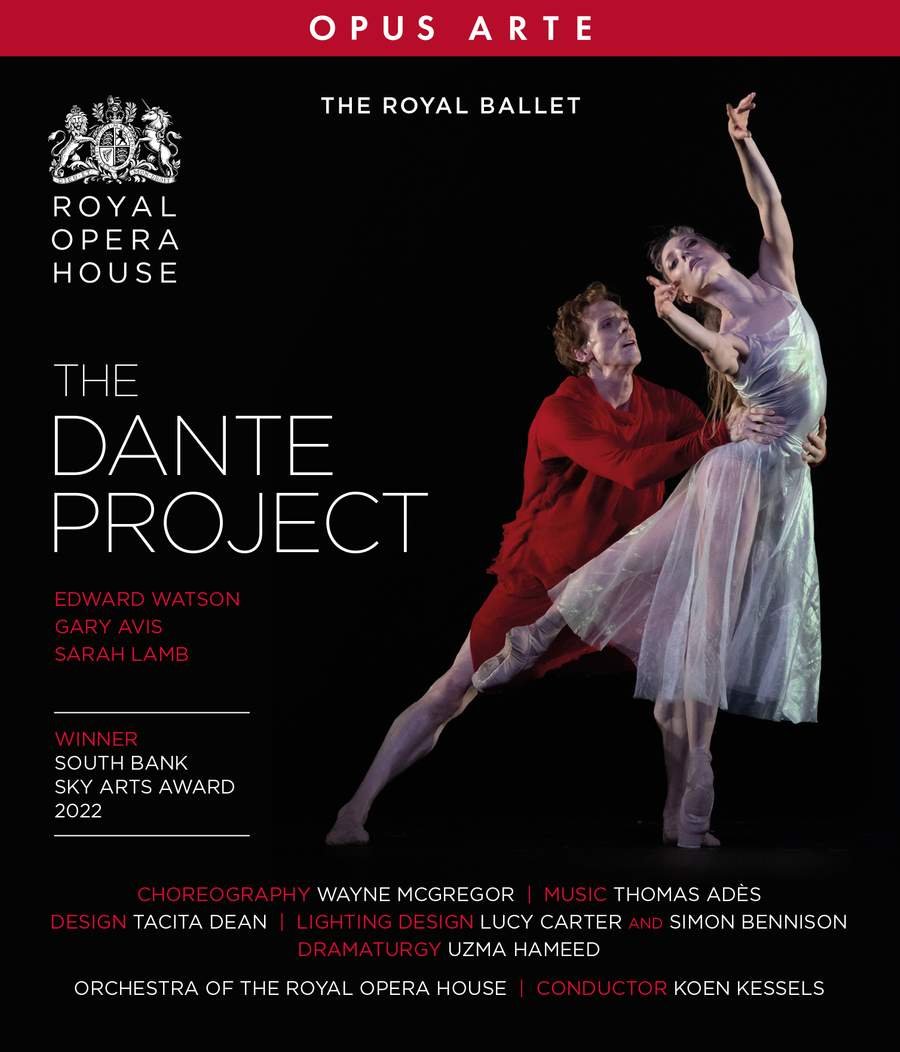
The Dante Project ballet. Original music by Thomas Adès. Book and choreography by Wayne McGregor. Stars Edward Watson (Dante); Gary Avis (Virgil), and Sarah Lamb (Beatrice) supported by many dancers of the Royal Ballet. Stage and costume designs by Tacita Dean; lighting by Lucy Carter and Simon Bennison; staging and assistant choreography by Amanda Eyles, Jenny Tattersall, and Mikaela Polley. Koen Kessels conducts the London Symphony Orchestra (Sergey Levitin concertmaster), Simon Halsey conducts the London Symphony Chorus. Directed for TV by Ross MacGibbon. Released 2023, disc has 5.1 dts-HD Master Audio sound. Grade: C-
Every great ballet starts with great music. The music here was composed by Thomas Adès specifically for this production. It is all appropriate for the action taking place on the stage. But it is uniformly acerbic and dissonant with lots of percussion, brass, and noise. If you are a fan of Adès or of this style of music, you will be pleased. I don’t like his style. An hour and 45 minutes of Adès is a strain for me no matter how good the dancing is.
The best thing about this show is . . .
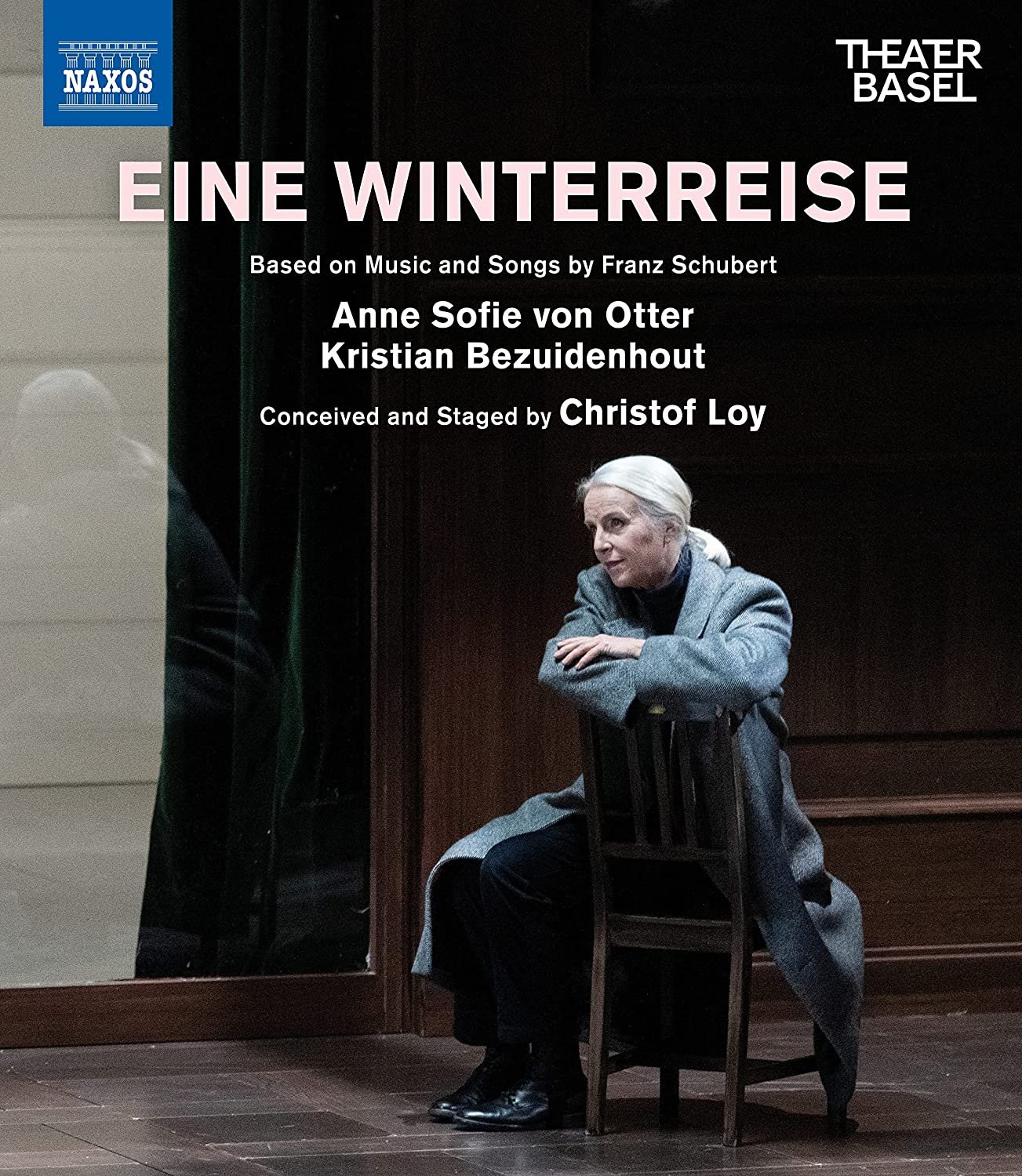
Eine Winterreise performance art work seen 2022 at Theater Basel, Switzerland. Based on music by Franz Schubert. Staged by Christof Loy. Stars are:
Anne Sofie Von Otter, who sings, acts, speaks, and dances (a bit) as Schubert’s Soul
Nicolas Franciscus, who acts, dances, and speaks as the Doppelganger, i.e. Schubert as a man
Giulia Tornarolli, who dances and acts the role of Viola, who represents Schubert’s circle of adoring admirers
Kristian Alm, who acts the role of Schober, Schubert’s bohemian friend, who probably introduced Schubert to The Courtesan
Matilda Gustafsson, who dances and acts as The Courtesan, who probably infected Schubert with syphilis
Kristian Bezuidenhout, who plays himself as Pianist
Claudio Rado, who appears briefly as Violinist
Set and costumes by Herbert Murauer; lighting by Roland Edrich; dramaturgy by Niels Nuijten. Directed for TV by Friedrich Gatz. Sung in German. Released 2023, disc has only stereo sound. Grade: A
The recording of this piece has 25 tracks of Schubert music . . .
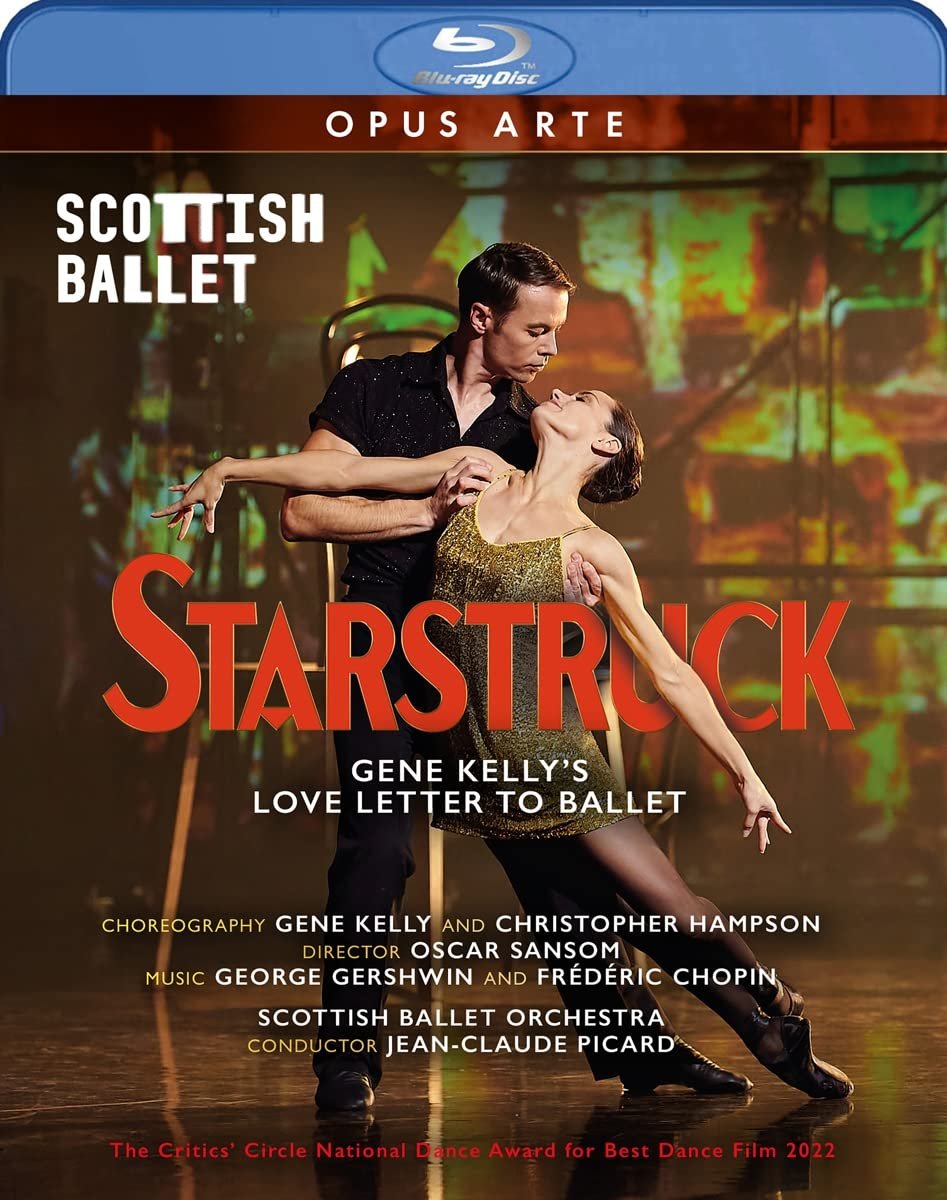
Starstruck ballet. Music by George Gershwin and Chopin. Choreography by Gene Kelly as reconstructed and embellished by Christopher Hampson. Directed 2021 by Oscar Sansom at the Scottish Ballet. Stars Sophie Martin (Star Ballerina/Aphrodite), Christopher Harrison (Choreographer/Zeus), Bruno Micchiardi (Pianist/Eros), Javier Andreu (Sweetheart Man/Lifeguard), Roseanna Loney (Sweetheart Woman/Girl with Ponytail), and Nicholas Shoesmith (Stagehand). Also features dancers Aisling Brangan, Grace Horler, Grace Poulley, Melissa Parsons, Kayla-Maree Tarantolo, Rimbaud Patron, Noa Barry, Hannah Cubitt, Alice Kawalek, Amy McEntee, Xolisweh Ana Richards, Anna Williams, Matthew Broadbent, James Hobley, Jamie Reid, Simon Schilgen, Eado Turgemen, Alarón Venegas, Pablo Dorado Calderon, Stevie Winning, and Helen Katamba. Jean-Claude Picard conducts the Scottish Ballet Orchestra. Designs and set by Lez Brotherston; lighting by Lawrie McLennan; artistic collaboration by Patricia Ward Kelly; guest rehearsal coaching by Alexandra Worral. No credit available for the video file. Released 2022, disc has 5.1 dts-HD Master Audio sound. Grade: B
Here we have a merger of classical ballet and American movie dancing. It originated in a 1960 piece called Pas de Dieux by Gene Kelly that was commissioned and performed by the Paris Opera Ballet . . .
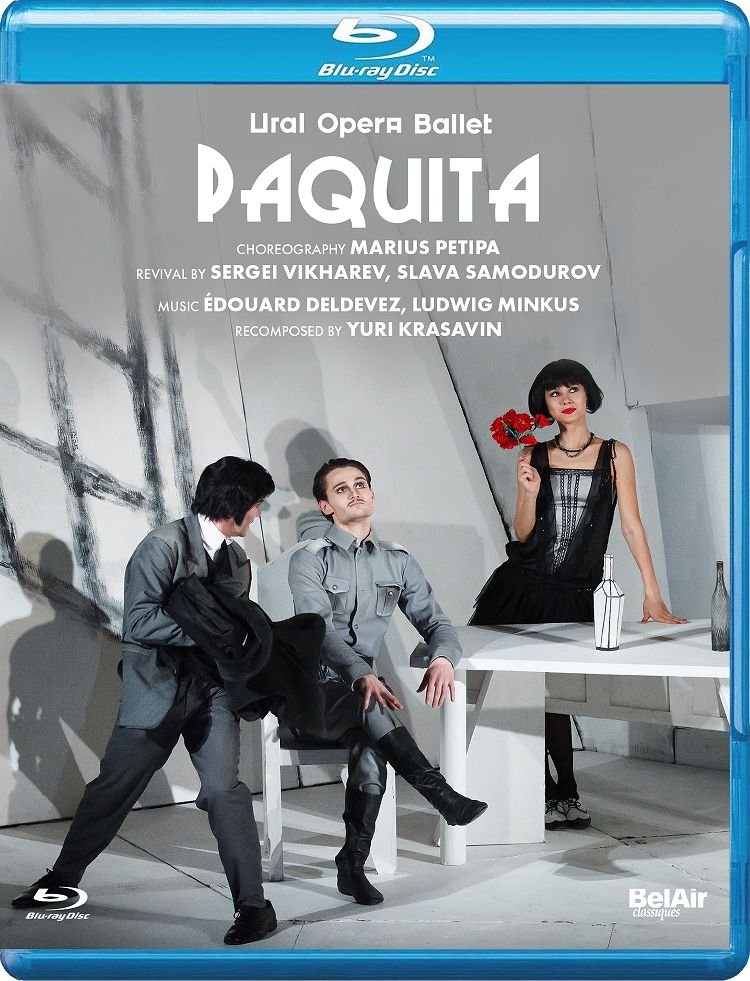
Paquita ballet. Music by Édouard Deldevez and Ludwig Minkus, recomposed by Yuri Krasavin. Choreography by Marius Petipa revived by Sergei Vikharev and Slava Samodurov. Libretto by Paul Fouché and Joseph Mazilier. Conception by Pavel Gershenzon; musical direction by Fyodor Lednyov. Directed 2021 by Slava Samodurov at the Ural Opera Theatre, Ekaterinburg. Stars Ekaterina Malkovich (Paquita), Arsenti Lazarev (Lucien d’Hervilly), Maxim Klekovkin (Iñigo), Victor Mekhanoshin (Don Lopez de Mendoza), Kamila Beknazarova (Seraphine), Anton Guzeev (Count d’Hervilly), Nadezhda Shamshurina (Countess d’Hervilly), and dancers from the Ural Opera Ballet. Pavel Klinichev conducts the Orchestra of the Ural Opera Ballet. Set design by Alyona Pikalova; costumes by Elena Zaytseva; lighting by Aleksander Naumov; choreography assistant was Klara Dovzhik. Produced by François Duplat. Directed for TV by Bertrand Normand. Released in 2022, disc has 2.0 PCM stereo sound. Grade: A -
Paquita was the first full ballet staged by Petipa in Russia (1846). The plot is simple: The governor of Spain in the Napoleon era is trying to get a Gypsy King to kill Lucien, a young French army officer. Paquita, a gypsy girl, saves Lucien’s life. What reward can the poor Gypsy girl get for this? Turns out she was . . .
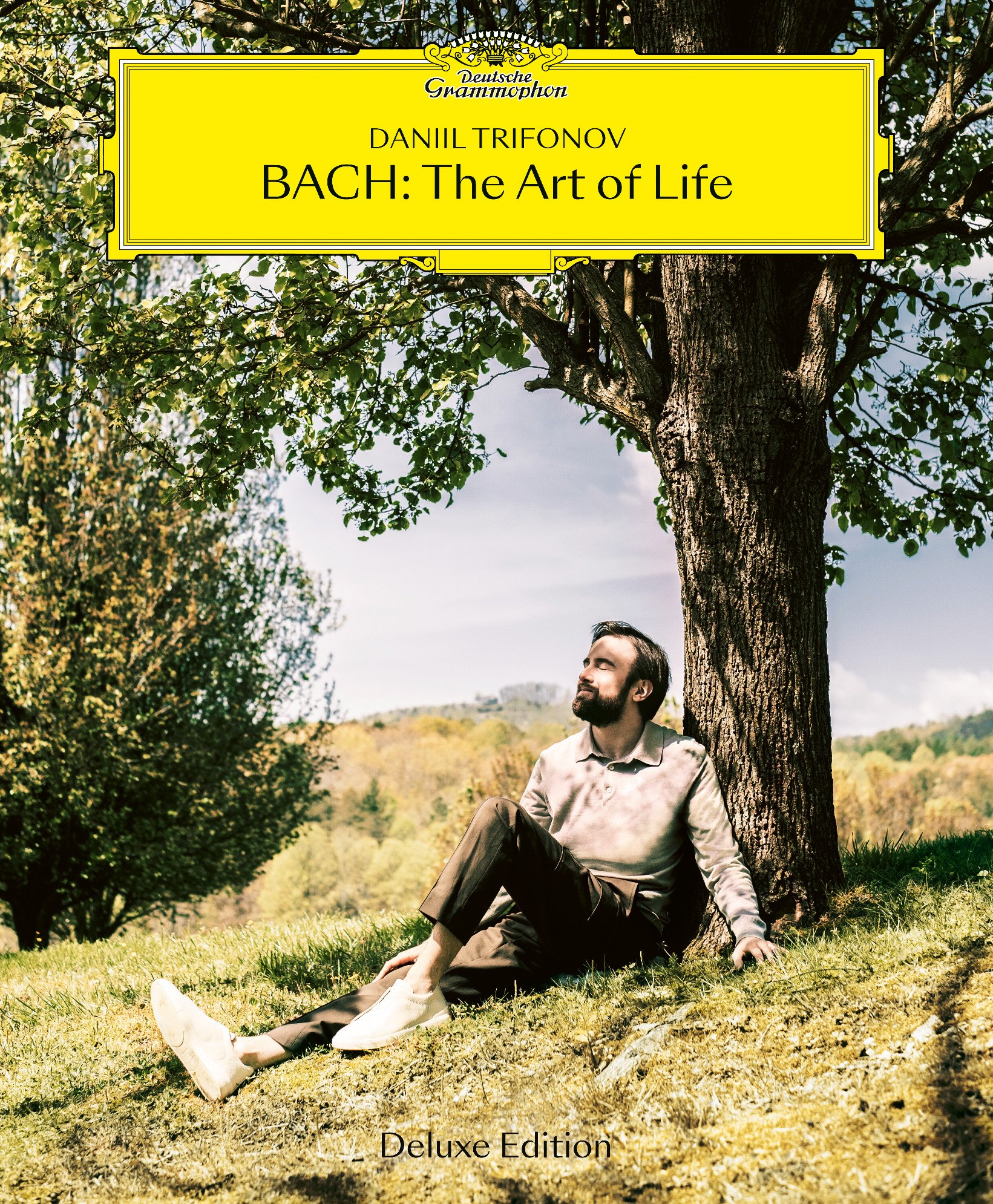
BACH: The Art of Life (Deluxe Edition) piano solo recital by Daniil Trifonov recorded October 2021 before a live audience at the Berlin Philharmonie. The major work presented was The Art of the Fugue by Johann Sebastian Bach. Other shorter pieces were:
Jesu, Joy of Man’s Desiring by Johann Sebastian Bach (arr. Myra Hess)
Sonata No. 5 in A Major by Johann Christian Bach
Polonaise No. 8 in E Minor by Wilhelm Friedemann Bach
Rondo in C minor by Carl Philippe Emanuel Bach
Directed for TV by Andreas Morell. Sound recorded with 24-bit/96 kHz files. Audio output in PCM Stereo, 5.1 dts-HD Master Audio, and Dolby Atmos. Video recorded in 1080i High Definition. Released 2022 in a “Deluxe Edition” with two audio CDs, audio on a Blu-ray disc, and a Blu-ray video of the entire live recital by Trifonov at the Philharmonie. Grade: A+ with the 💓 designation.
Trifonov’s BACH: The Art of Life project with DG has come out in a confusing array of editions and formats with different content. It was hard for me to tell for sure from advertisements for this title whether the Blu-ray disc in fact has a HD video of Trifonov playing this music. It does.
Please note there is no DVD video of this. I think this may be the first time a classical music video has been issued by a major western publishing company in Blu-ray HD video only. This is in itself a huge milestone . . .
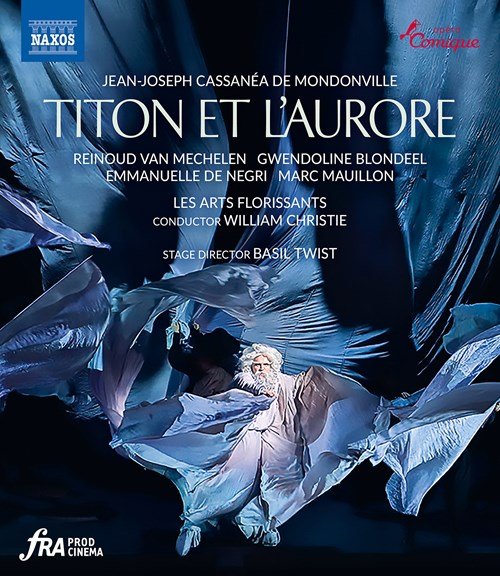
Jean-Joseph Cassanéa de Mondonville Titon et l’Aurore (Tithonus and Aurora) opera to a libretto by Claude-Henri de Fusée. Directed 2021 by Basil Twist at the Opéra Comique in Paris. Stars Reinoud Van Mechelen (Titon), Gwendoline Blondeel (L’Aurore), Emmanuelle de Negri (Palès), Marc Mauillon (Éole), Julie Roset (Amour), Renato Dolcini (Prométhéé) as well as Virginie Thomas, Maud Gnidzaz, and Juliette Perret (Nymphes). William Christie conducts Les Arts Florissants. Set and puppet design by Basil Twist; video design by Daniel Brodie; lighting design by Jean Kalman. Directed for TV by François Roussillon. Sung in French. Released 2021, disc has 5.1 dts-HD Master Audio sound. Grade: B+
When Italian singers in 1752 got a hit staging Pergolesi’s La serva padrona in Paris, the War of the Clowns broke out. The French counterattack was Mondonville’s Titon et l’Aurore. It premiered in Paris in 1753 (the year George Washington turned 21). The audience was mostly French soldiers. They packed the best seats to defend the local performers from partisans of Italian opera, who were forced into the upper galleries . . .
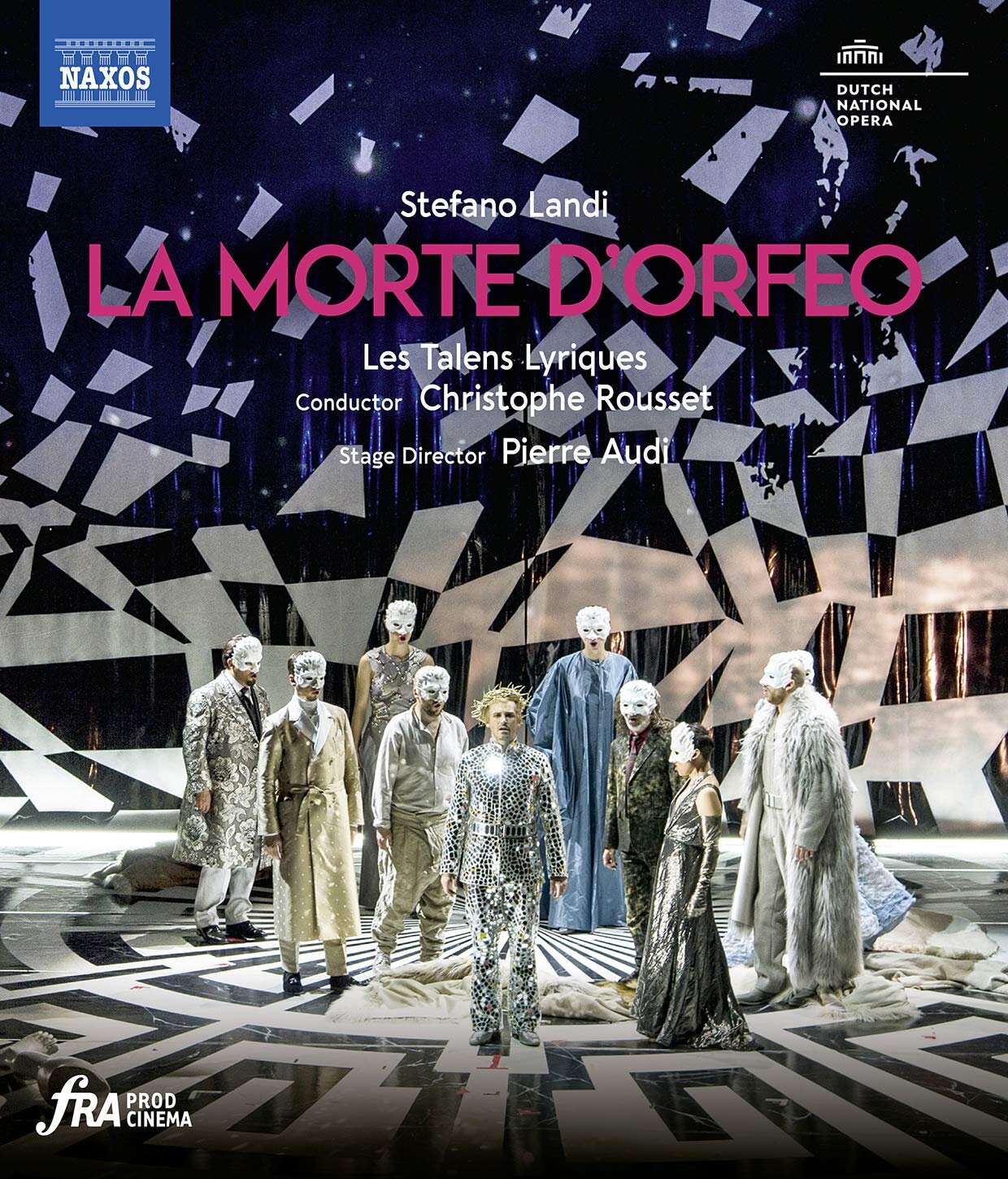
Stefano Landi La morte d’Orfeo opera to a libretto by an anonymous author. Directed 2018 by Pierre Audi at the Muziekgebouw, Amsterdam. Stars Cecilia Molinari (Teti/Nisa/Lincastro/Euridice/Euretti), Renato Dolcini (Fato/Fileno), Alexander Miminoshvili (Ebro/Giove), Gaia Petrone (Aurora/Fosforo), Rosina Fabius (Euretti), Juan Francisco Gatell (Orfeo), Kacper Szelążek (Mercurio/Bacco), Emiliano Gonzales Toro (Ireno/Apolline), Salvo Vitale (Furore/Caronte), and Magdalena Puta (Calliope/Euretti). Christophe Rousset conducts Les Talens Lyriques. Set design by Christof Hetzer; costume design by Robby Duiveman; lighting design by Bernd Purkrabek; dramaturgy by Klaus Bertisch. Directed for TV by Misjel Vermeiren. Sung in Italian. Released 2020, disc has 5.1 dts-HD Master Audio sound. Grade: A+
Landi’s La morte d’Orfeo was first performed in 1619, just 12 years after Monteverdi composed his L’Orfeo. Landi takes up the story where Monteverdi left off with Orfeo mourning the second death of his wife . . .
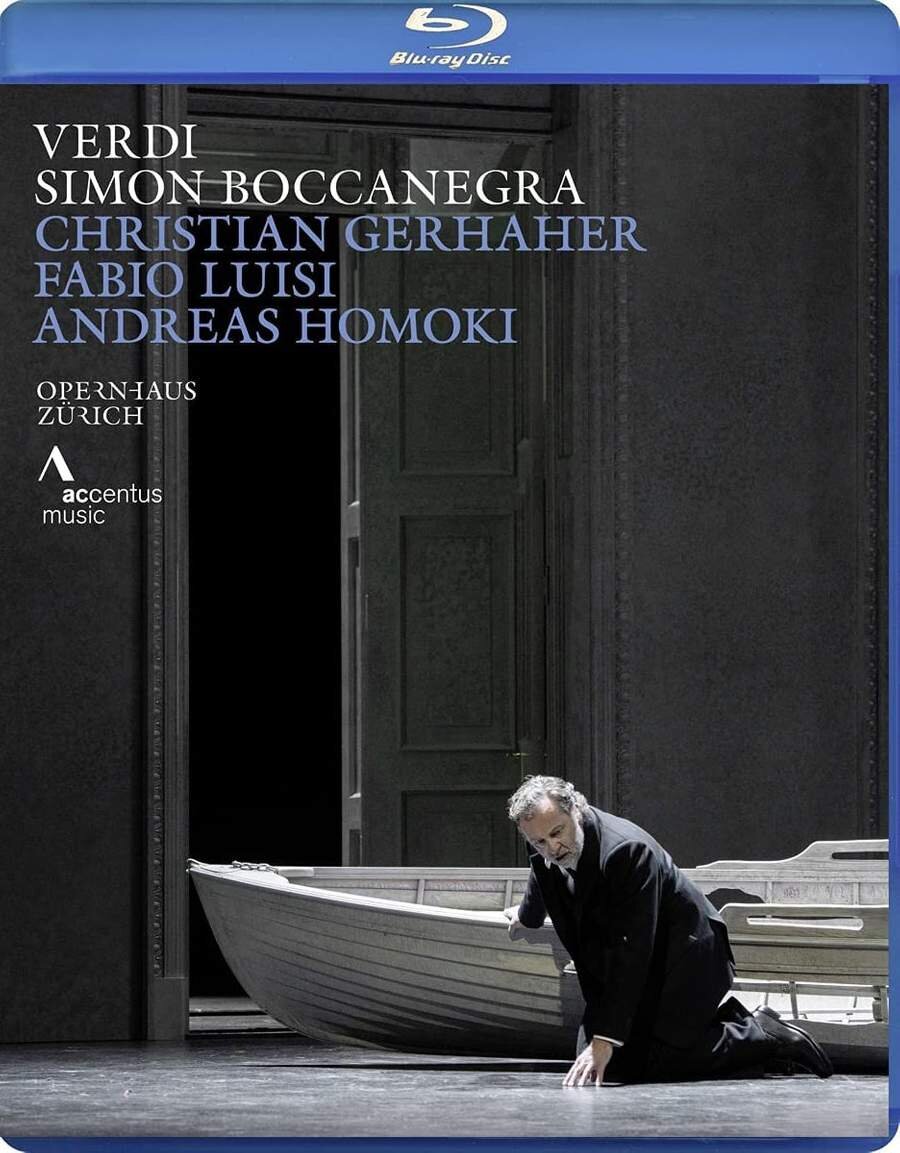
Verdi Simon Boccanegra opera to a libretto by Francesco Maria Piave and later revised by Arrigo Boito. Directed 2020 by Andreas Homoki at the Opernhaus Zürich. Stars Christian Gerhaher (Simon Boccanegra), Jennifer Rowley (Amelia Grimaldi), Christof Fischesser (Jacopo Fiesco), Otar Jorjikia (Gabriele Adorno), Nicholas Brownlee (Paolo Albiani), Brent Michael Smith (Pietro), Siena Licht Miller (Amelia’s Maid), and Savelii Andreev (Captain). Fabio Luisi conducts the Philharmonia Zürich, the Chor der Oper Zürich, and the Statistenverein am Opernhaus Zürich. Set and costume design by Christian Schmidt; lighting design by Frank Evin; dramaturgy by Fabio Dietsche. Directed for TV by Michael Beyer; produced by Paul Smaczny. Sung in Italian. Released 2020, disc has dts-HD Master Audio sound. Grade: A+
If you are not a Verdi expert, you may find this opera hard to follow. For help, see my synopsis at the end of this review. You have to be sharp to follow the plot (even with help). I hope my screenshots will help you learn who is who . . .
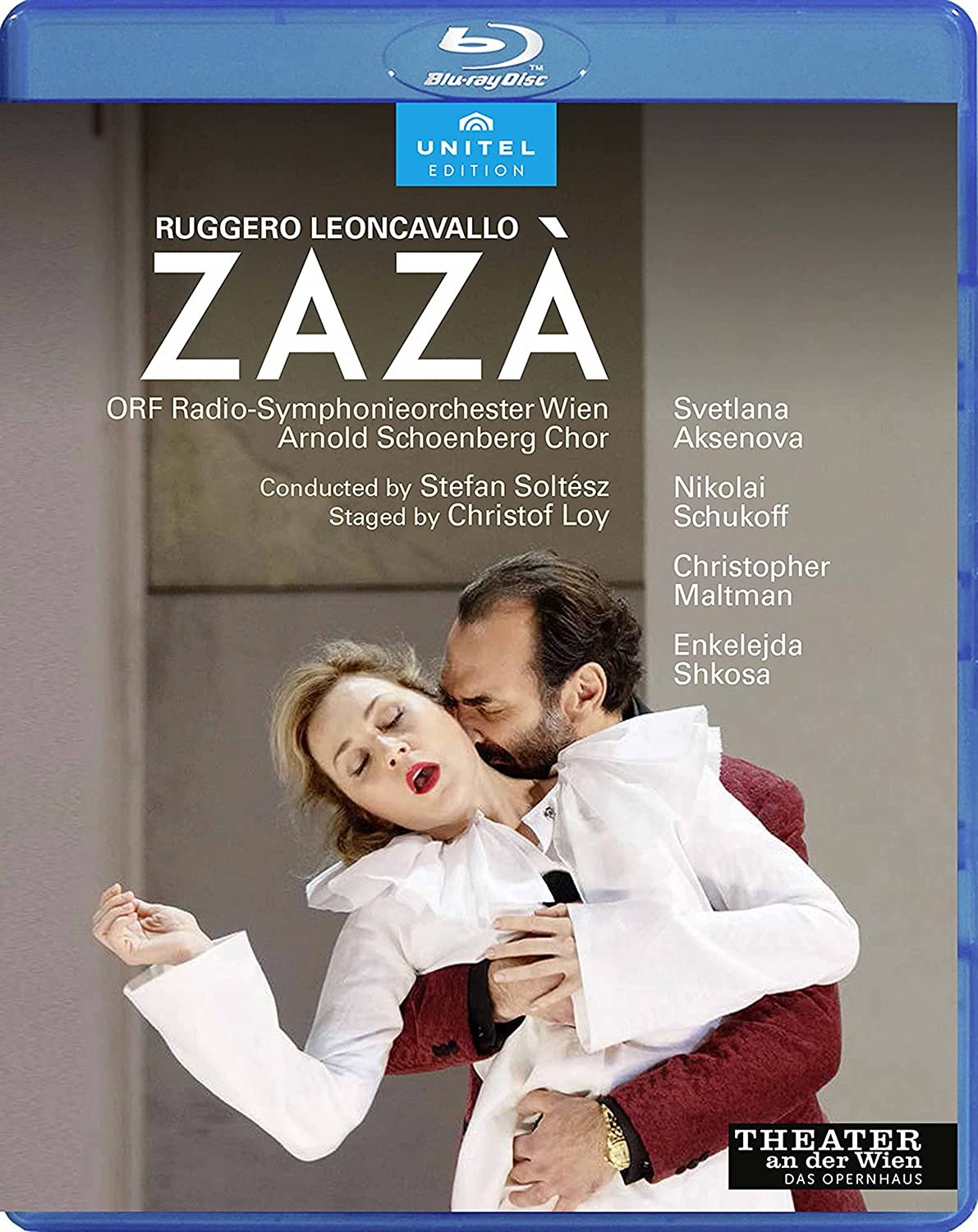
Leoncavallo Zazà opera to libretto by the composer and Carlo Zangarini. Directed 2020 by Christof Loy at the Theater an der Wien. Stars Svetlana Aksenova (Zazà), Enkelejda Shkosa (Anaide), Dorothea Herbert (Floriana / Madame Dufresne), Juliette Mars (Natalia), Nikolai Schukoff (Milio Dufresne), Vittoria Antonuzzo (Totò Dufresne), Christopher Maltman (Cascart), Tobias Greenhalgh (Bussy), Paul Schweinester (Courtois), Ivan Zinoviev (Duclou), Johannes Bamberger (Augusto / Concierge at Dufresne), Patrick Maria Kühn (A Gentleman); Ena Topčibašić (Claretta), Liliya Namisnyk (Simona), Anna Possarnig and Elias Morales (Two Spanish Dancers), Beatriz Delgardo Flores and Elvis Grezda (Two Clowns), Carina Nopp and Diego Federico (Two Artists), Lilo Besold (Dresser), and Fabio Coutinho (Fireman). Stefan Soltész conducts the ORF Radio-Symphonieorchester Wien and the Arnold Schoenberg Chor (Chorus Master Erwin Ortner). Set design by Raimund Orfeo Voigt; costume design by Herbert Barz-Murauer; lighting design by Reinhard Traub; choreography by Thomas Wilhelm; dramatic advisor was Klaus Bertisch. Directed for TV by Tiziano Mancini. Sung in Italian. Released 2021, disc has 5.0 dts-HD Master Audio sound. Grade: A+ with the 💓 designation.
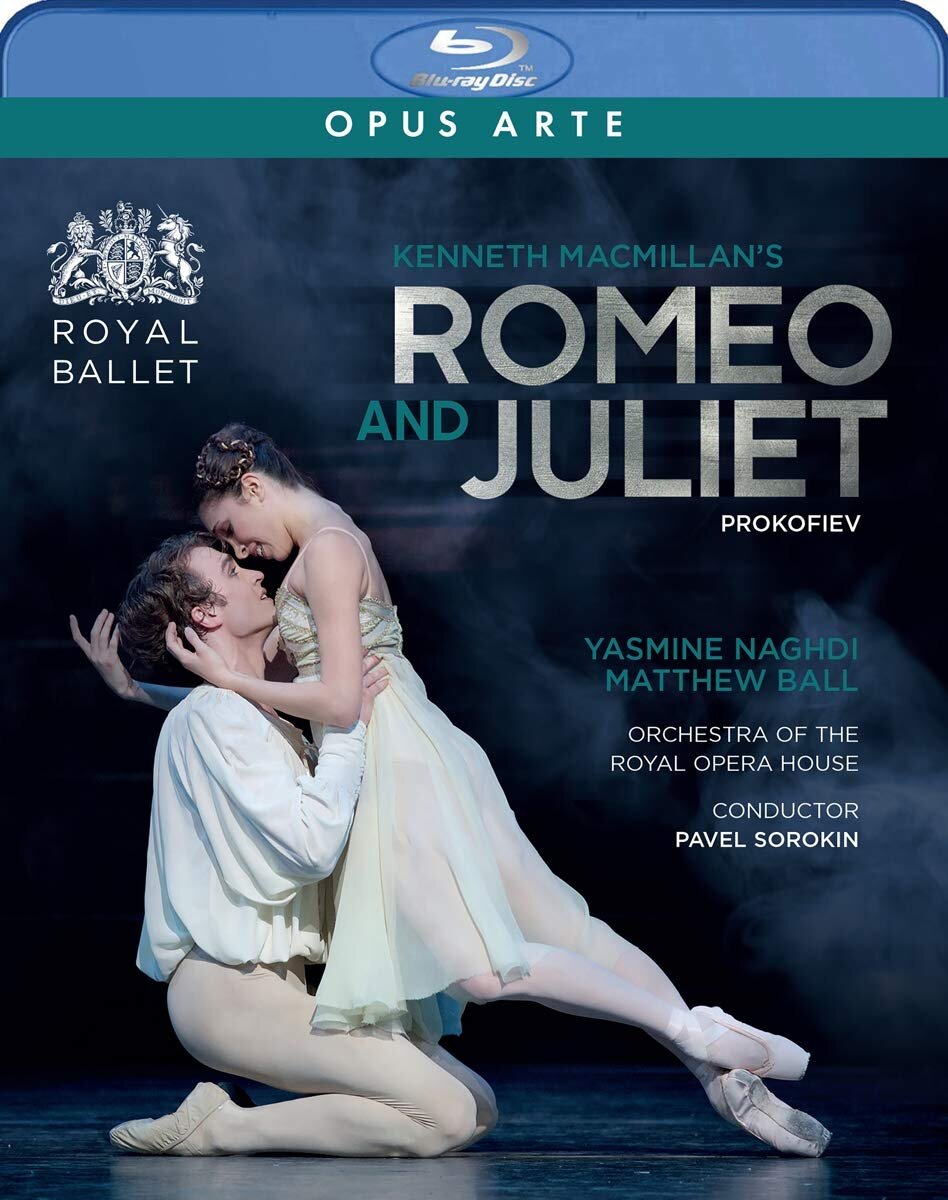
💓 Romeo and Juliet ballet. Music by Sergei Prokofiev. Libretto by Leonid Lavrovsky and Sergei Prokofiev. Choreography by Kenneth MacMillian. Staged 2019 at the Royal Opera House by Julie Lincoln and Christopher Saunders.
Stars Yasmine Naghdi (Juliet), Matthew Ball (Romeo), Valentino Zucchetti (Mercutio), Gary Avis (Tybalt), Benjamin Ella (Benvolio), Nicol Edmonds (Paris), Christopher Saunders (Lord Capulet), Christina Arestis (Lady Capulet), Kristen McNally (Nurse), Lord Montague (Jonathan Howells), Lady Montague (Tara-Brigitte Bhavnani), Frair Laurence (Jonathan Howells), Escalus (Thomas Whitehead), Rosaline (Fumi Kaneko).
Also stars Beatriz Stix-Brunell, Mica Bradbury, and Romany Pajdak (Three Harlots), Leticia Dias, Isabella Gasparini, Meaghan Grace Hinkis, Chisato Katsura, Ana Rose O’Sullivan, and Gemma Pitchley-Gale (Juliet’s Friends), as well as Marcelino Sambé, Luca Acri, Téo Dubreuil, Paul Kay, and Tomas Mock (Mandolin Dance).
Pavel Sorokin conducts the Orchestra of the Royal Opera House (Sergey Levitin Concert Master). Designs by Nicholas Georgiadis; lighting design by John B. Read; staging by Julie Lincoln and Christopher Saunders. Directed for TV by Ross MacGibbon. Released 2021, disc has 5.1 dts-HD Master Audio sound. Grade: A+
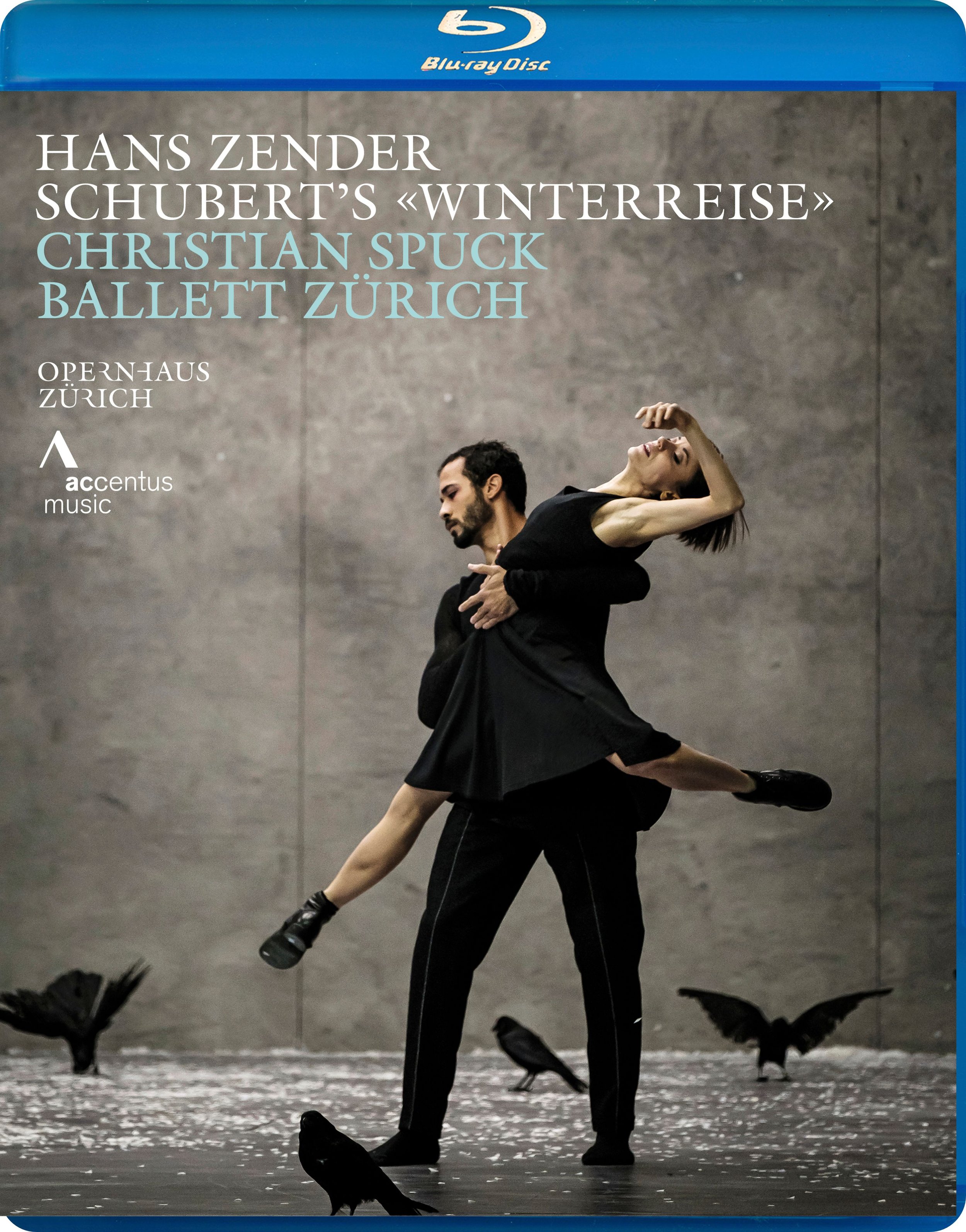
Schubert’s Winterreise song cycle ballet. Music is Hans Zender’s 1993 Winterreise for tenor and small orchestra, which is an interpretation of the Schubert song cycle for solo voice and piano. Choreographed and performed 2021 by Christian Spuck at the Ballett Zürich. Mauro Peter sings tenor. Benjamin Schneider conducts forces from the Philharmonia Zürich. Set by Rufus Didwiszus; costumes by Emma Ryott; lighting by Martin Gebhardt; dramaturgy by Christian Spuck and Michael Küster. Directed for TV by Michael Beyer; produced by Paul Smaczny. Sung in German. Subtitles in German and English. Released 2021, disc has 5.1 dts-HD Master Audio sound. Grade: A
Here we enjoy the product of 5 geniuses: (1) Wilhelm Müller, who wrote the Winterreise poetry, (2) Schubert, who published the original song cycle in 1828, (3) Hans Zender, who composed his interpretation of the music in 1993, (4) Christian Spuck, who put all this on the ballet stage in 2019, and (5) Mauro Peter, seen below, who sings the entire cycle for Zender’s composition by memory standing in the pit or wandering about the stage . . .
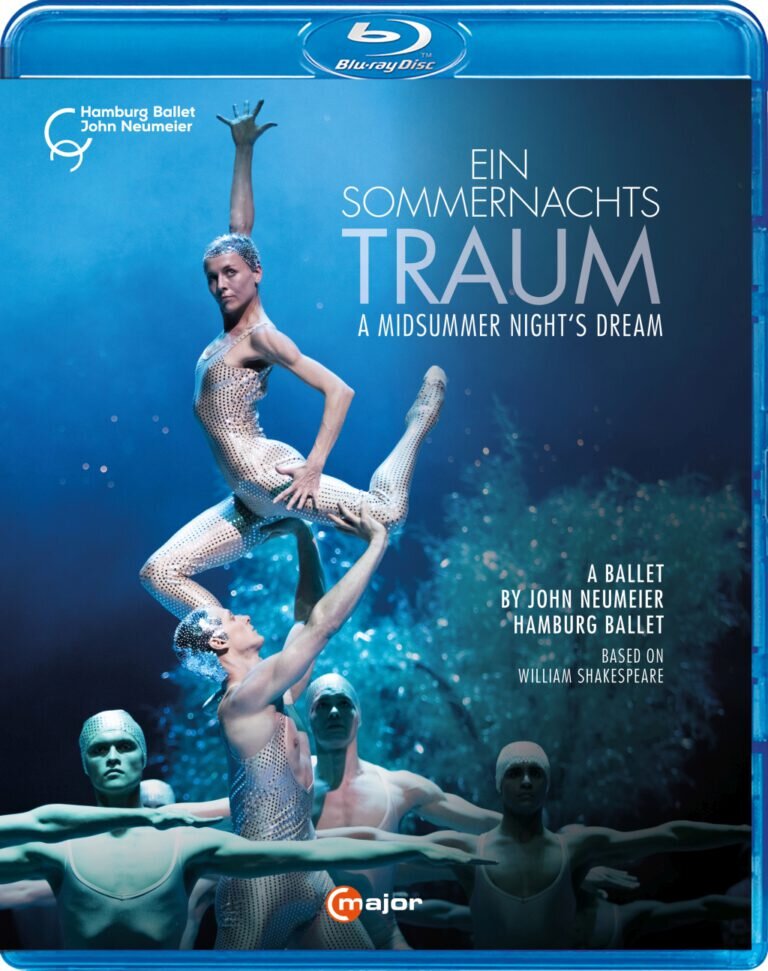
Ein Sommernachtstraum (A Midsummer Night’s Dream) ballet. Recorded music of Mendelssohn, Ligeti, and traditional tunes for organ grinder. Staged and choreographed 2021 by John Neumeier at the Hamburg Ballet. Stars Anna Laudere (Hippolyta/Titania), Edvin Revazov (Theseus/Oberon), Alexandr Trusch (Philostrate/Puck), Hélène Bouchet (Helena), Madoka Sugai (Hermia), Karen Azatyan (Demetrius), Jacopo Bellussi (Lysander), and Marc Jubete (Bottom/Pyramus) as well as many other dancers in the Hamburg Ballet. Stage design and costumes by Jürgen Rose; lighting by John Neumeier. Directed for TV by Myriam Hoyer. Incudes The Artist’s Privilege, an interview with Neumeier about this production. Released 2021, disc has 5.1 dts-HD Master Audio sound. Grade: A+
A Midsummer Night’s Dream is the most famous stage comedy in the Western tradition. Artists of every ilk have tried to adapt it including—believe it or not—synchronized swimmers. It’s a complicated play. To turn Shakespeare’s play with many interwoven plots lines into a ballet, Neumeier had to simplify and add his own twists . . .
Erich Wolfgang Korngold Die tote Stadt opera to a libretto by the composer and his father, Julius Korngold, under the collective pseudonym of Paul Schott. Directed 2019 by Simon Stone at the Bayerische Staatsoper, Munich. Stars Jonas Kaufmann (Paul), Marlis Petersen (Marietta/Die Erscheinung Mariens [The Apparition of Marien]), Andrzej Filończyk (Frank/Fritz), Jennifer Johnston (Brigitta), Mirjam Mesak (Juliette), Corinna Scheurle (Lucienne), Manuel Günther (Gaston/Victorin), and Dean Power (Graf Albert). Kirill Petrenko conducts the Bayerisches Staatsorchester and the Chorus and Children’s Chorus of the Bayerische Staatsoper (Chorus Master Stellario Fagone). Sets by Ralph Myers; costumes by Mel Page; lighting by Roland Edrich. Directed for TV by Myriam Hoyer; produced by Dr. Roland Schwab and Guido Gärtner. Sung in German. Released 2020, disc has 5.1 dts-HD Master Audio sound. Grade: A
This title created more excitement and critical praise than any other in 2021. It’s hard to imagine anyone doing better by Korngold’s libretto and score. But for me, the best thing about this title is that it led to my reading of the book behind it: Bruges-la-Morte by the symbolist poet and novelist George Rodenbach. Finally, it was exciting to see our new super-nova videographer, Myriam Hoyer, at work on a recent important opera production. So in this review, I’ll tell you about . . .
Left or Above are Full Reviewsㅤㅤ
Right or Below are Basic Stories about New Titles
We split the front journal page into two sections. The first section has our most recent full reviews with all the screenshots. The section below are stories on new titles with basic information and preliminary comments only. In each section, the latest information is at the top.
Now you don’t have to scroll through the entire journal (with 30 entries) to find the full reviews.
(Ignore the Read More link below—we don’t know how to get rid of it.)
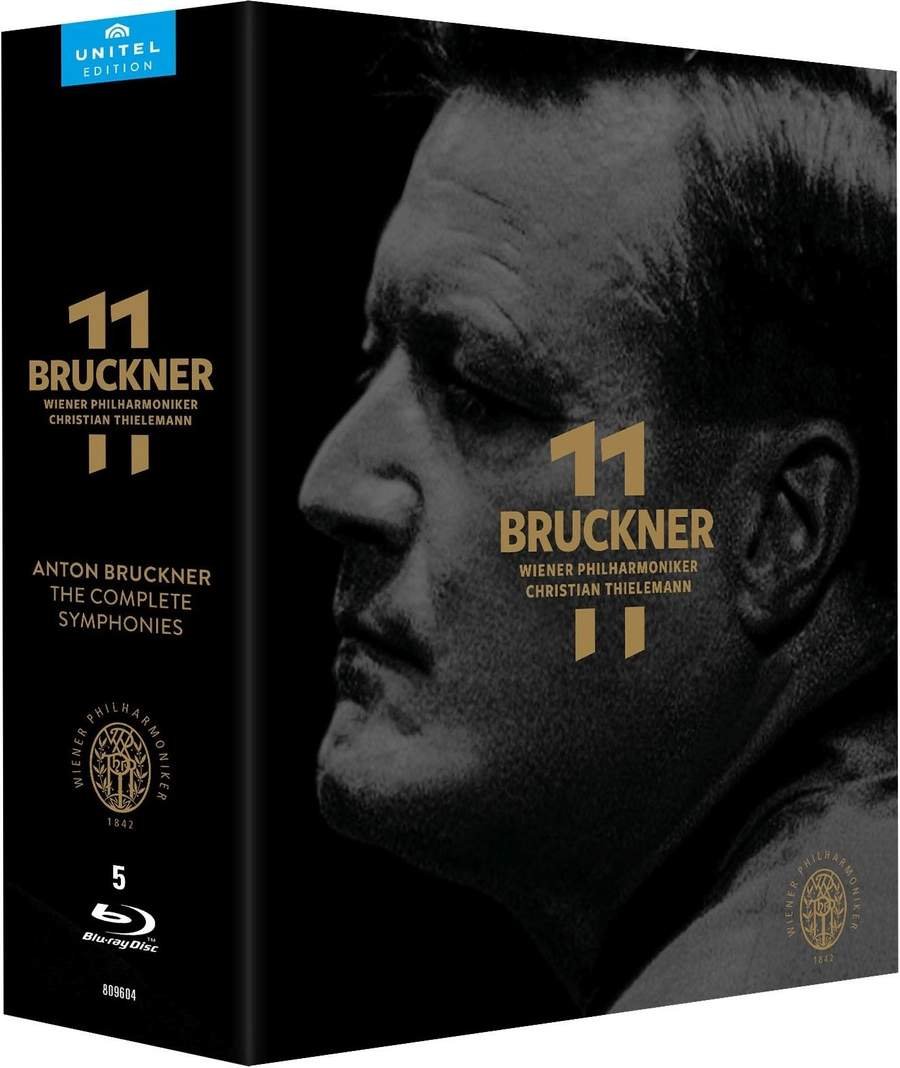
Bruckner 11: The Complete Symphonies box set has the following works recorded by the Wiener Philharmoniker conducted by Christian Thielemann: Here is a list of the 11 works:
No. 0 in D minor “Nullte”
No. 1 in C minor
No. 2 in C minor
No. 3 in D minor “Wagner”
No. 4 in Eb major “Romantic”
No. 5 in Bb major
No. 6 in A major
No. 7 in E major
No. 8 in C minor
No. 9 in D minor
No. 00 in F minor “Study Symphony”
The gimmick here is that two incomplete works have been added to the 9 works usually considered to be the complete symphonies. All of this was issued earlier in 5 single Blu-ray discs. Now you can get all 5 in a single box for a savings. Never before was so much confusion created in the recording industry. See our Alphalist if you are interested in buying a particular symphony—we have 5 earlier titles listed there as they came out earlier . . .
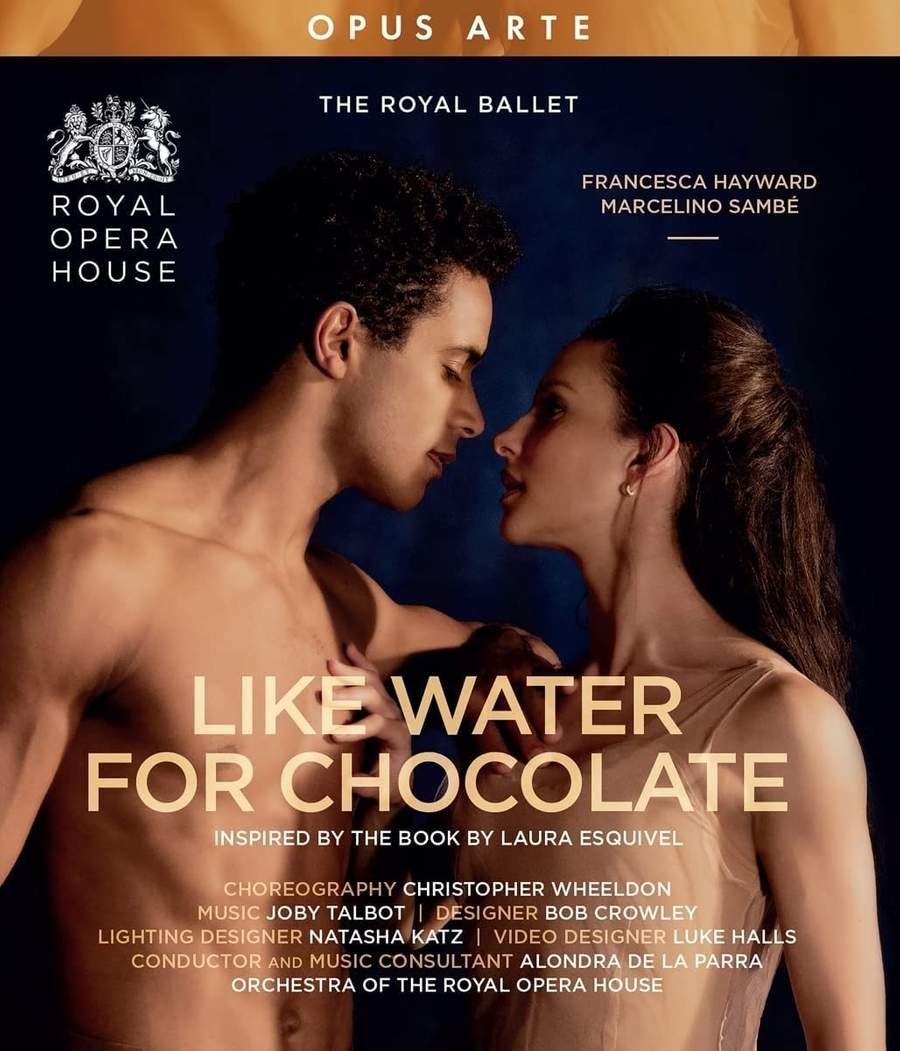
Like Water for Chocolate ballet. Music by Joby Talbot. Book and choreography 2022 by Christopher Wheeldon after the novel by Laura Esquivel. Stars Francesca Hayward (Tita), Laura Morera (Mama Elena), Mayara Magri (Rosaura), Meaghan Grace Hinkis (Gertrudis), Marcelino Sambé (Pedro), Matthew Ball (Dr. John Brown), Christina Arestis (Nacha), Cesar Corrales (Juan Alejandrez), Gary Avis (Don Pasqual), and Isabella Gasparini (Chencha). Alondra de la Parra conducts the Orchestra of the Royal Opera House (Concert Master Valsko Vassilev). Solo guitar Tomás Barreiro; guest singer Siān Griffiths. Designs by Bob Crowley; lighting by Natasha Katz; video designs by Luke Halls. Directed for TV by Ross MacGibbon. Released 2023, disc has 5.1 dts-HD Master Audio sound. Grade: NA
As I write, this new production has been seen only a few times in London at The Royal Opera and in New York at the American Ballet Theater. It’s pretty impressive to see how quickly this has been published in Blu-ray for the rest of us to enjoy…
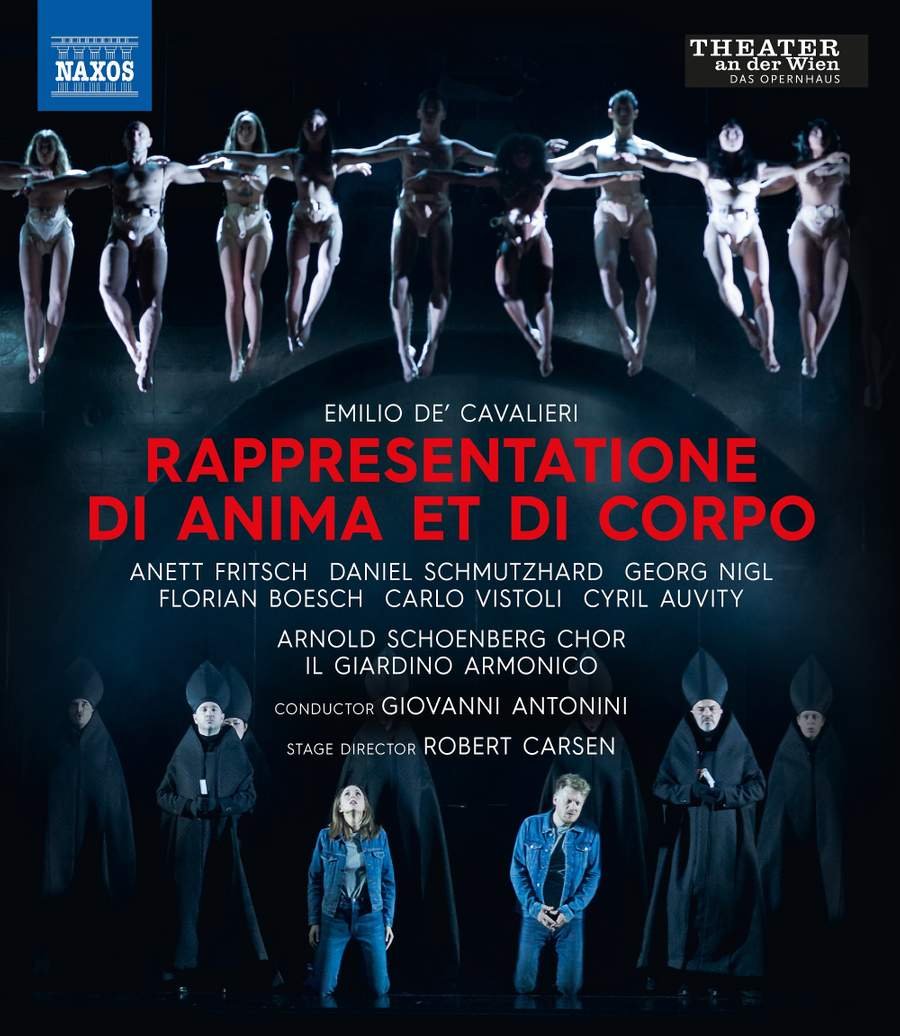
Emilio de’ Cavalieri Rappresentatione di Anima et di Corpo (Portrayal of the Soul and the Body) opera to libretto by Agostino Manni. First performed in 1600, Cavalieri believed this to be the first opera. Directed 2021 by Robert Carson at the Theater an der Wien in Vienna, Austria. Stars Georg Nigl (Time/The World/Damned Soul), Cyril Auvity (Intellect), Anett Fritsch (The Soul), Daniel Schmutzhard (The Body), Florian Boesch (Councilor), Margherita Maria Sala (Peace), Michal Marhold and Matus Simko (Companions of Peace), Carlo Vistoli (Guardian Angel), Giuseppina Bridelli (Mundane Life/Blessed Soul). Giovanni Antonini conducts the Arnold Schoenberg and Il Giardino Armonico. Sets by Robert Carson and Luis Carvalho; costumes by Luis Carvalho; lighting by Robert Carsen and Peter van Praet; choreography by Lonera Randi; dramaturgy by Ian Burton. Directed for TV by Paul Landsmann and Peter Landsmann. Sung in Italian. Released 2023, disc has stereo sound only. Grade: NA
Experts today argue whether Cavalieri wrote an oratorio or an opera. And if it’s an opera, was he the the first as he claimed? Well, he was for sure around at the beginning. The music is available in CDs. There are a surprisingly large number of streamed videos of this music on YouTube and other Internet providers including what appears to be a full version of the music by Il Giardino Armonico. But Carsen is the first to produce a video of this music performed as an opera published in Blu-ray for home theaters . . .
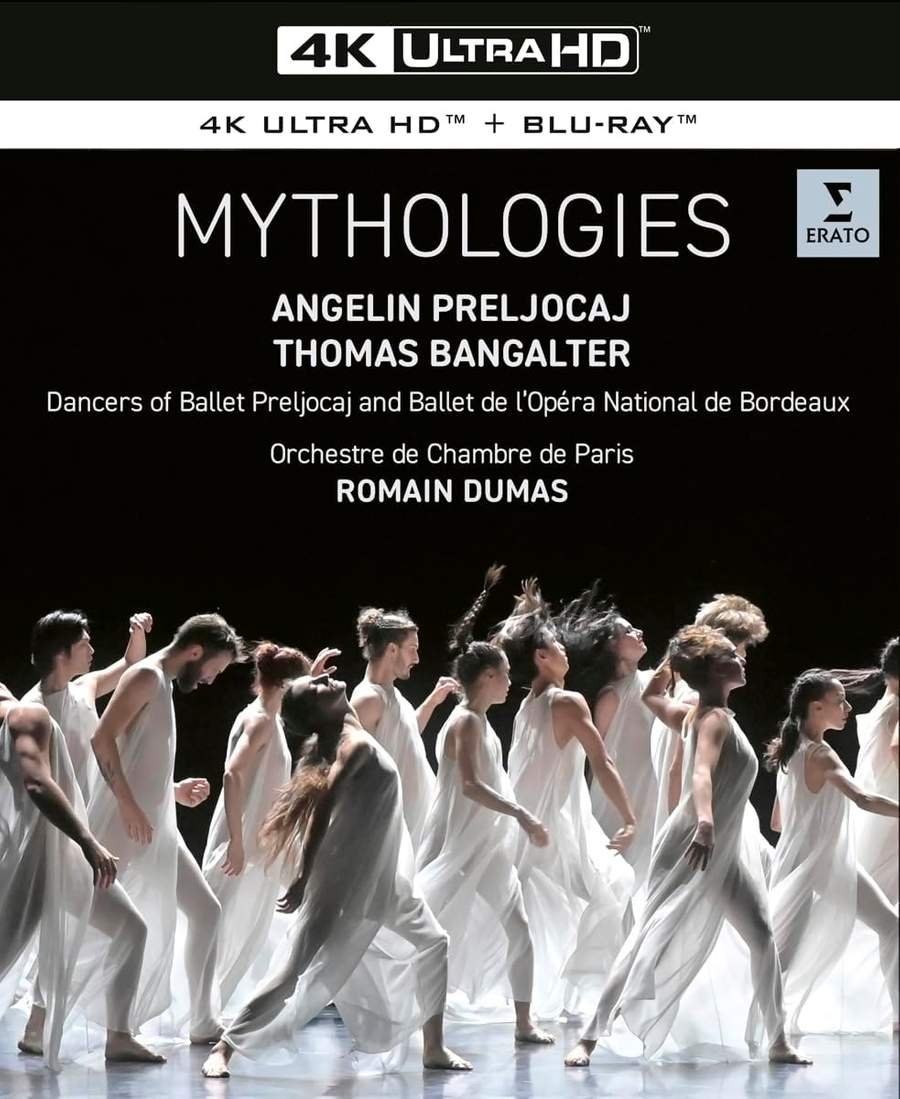
Mythologies modern classical dance production for 20 dancers. Original music for symphony orchestra by Thomas Bangalter (previous of Daft Punk fame). Choreographed and directed 2020 by Angelin Preljocaj at the Grand-Théâtre de Bordeaux, France. Stars 10 dancers from the Ballet Preljocaj and 10 dancers from the Ballet de l'Opéra de Bordeaux. Romain Dumas conducts the Orchestre National Bordeaux Aquitaine. Scenography by Adrien Chalgard; costumes by Adeline André; lighting by Èric Soyer; video projections by Nicolas Clauss; assistant director was Youri Aharon Van den Bosch. This was shown extensively on the French TV channel culturbox. It was published in 2023 in an 89 minute YouTube file. Directed for TV by Thomas Pascal. Grade: A+ (for a YouTube video).
This is one of the very best new ballet productions to be staged in recent years. As I said before, Preljocaj has a refreshing style that mixes modern dance with military precision in larger formations with unusual props and concepts, here including even a magic trick. Above all, he is a genius at displaying feminine sexuality in a slick, tasteful way.
This abstract production has no through-story. It treats 23 ancient and modern myths in separate scenes without a break: (1) Premiers Mouvements, (2) Le Catch . . .
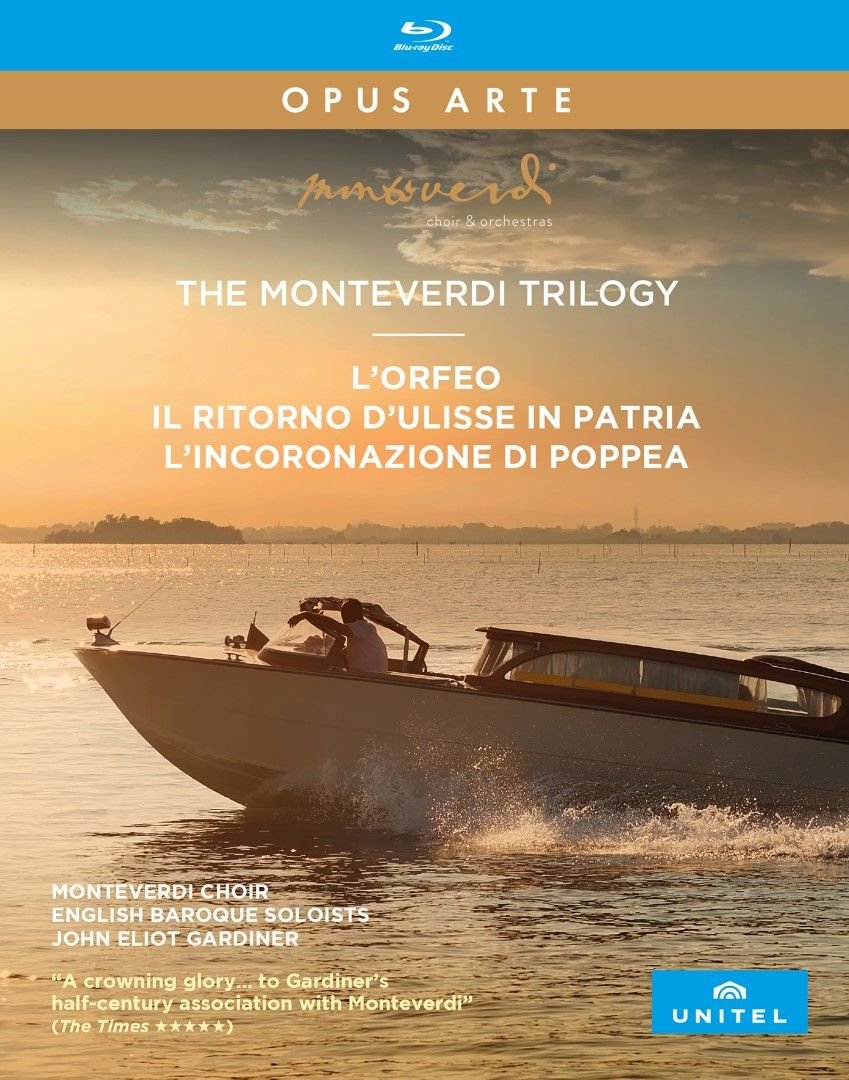
The Monteverdi Trilogy consists of three titles previously reported here:
All these titles are concerts with a few props. They are not opera performances. I maybe should have excluded these titles. But Gardiner is one of the most famous conductors of early music, so I list them out of respect for him. I give a D to these recordings. This doesn’t mean they are bad. It just means don’t buy this unless you know what you are doing . . .
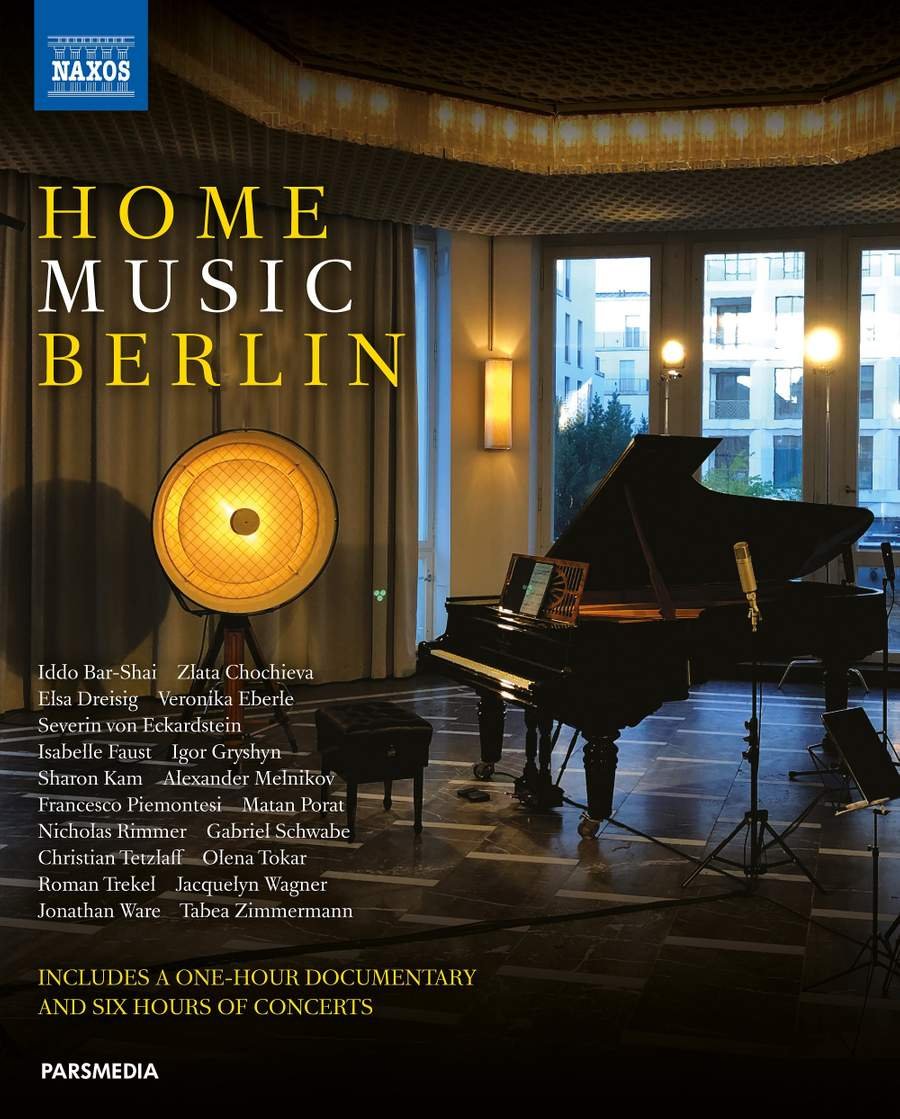
Home Music Berlin concert series. When the Covid-19 lockdown hit Berlin in 2020, video director Jan Schmidt-Garre and pianist Francesco Piemontesi dreamed up a live-streaming concert series for top-drawer but out-of-work Berlin musicians. Eventually 19 instrumentalists and singers performed 14 concerts at the Schinkel Pavillon in Berlin for a live-streaming audience. The best recordings from the project are assembled here and there is also a documentary about the project. This yields almost 7 hours of music and documentary info on 2 Blu-ray discs to be played in home theaters. See the back art above for the names of all the musicians and the pieces performed. Songs are rendered in various languages. There are sub-titles, but don’t expect too much in that regard. Released 2023, discs have 5.1 dts-HD Master Audio sound. Grade: NA
We have generally been disappointed by the fine-art documentary titles that have come out in Blu-ray. This title, however, promises to be more of a concert than a documentary. So we take a chance . . .
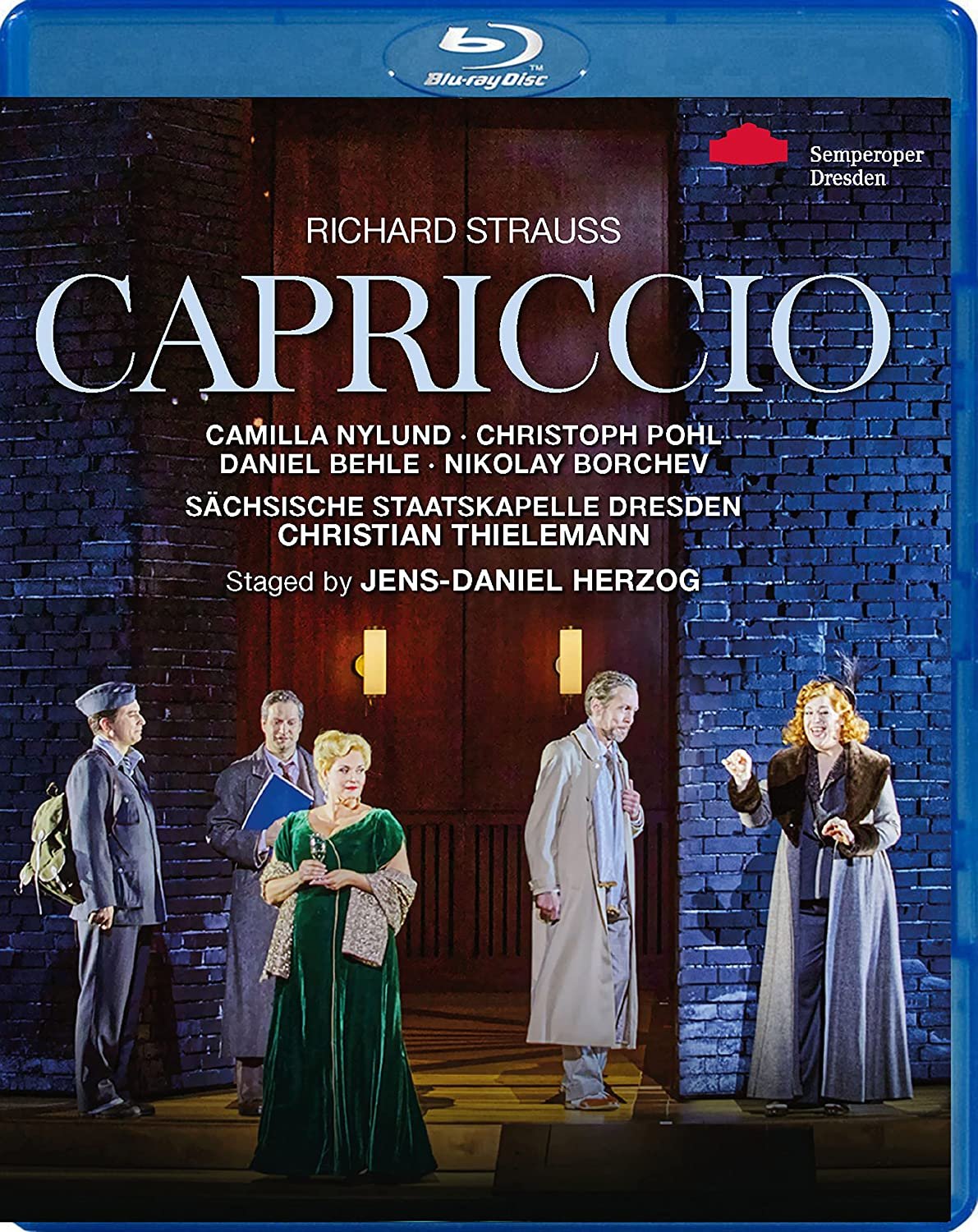
Richard Strauss Capriccio opera to a libretto by Clemens Krauss and Richard Strauss. Directed 2021 by Jens-Daniel Herzog at the Semperoper Dresden. Stars Camilla Nylund (The Countess), Christoph Pohl (Flamand), Daniel Behle (Olivier), Nikolay Borchev (La Roche), Morten Frank Larsen (The Count), George Zeppenfeld (Director of a Theatre), Christa Mayer (Clairon), Tuuli Takala and Beomjen Kim (Italian Singers), Frank Blümel, Friedrich Darge, Alexander Födisch, Torsten Schäpan, Norbert Klesse, Thomas Müller, Juan Carlos Navarro, and Jörg Reißmann (Servants), Torben Jürgens (Majordomo), and Wolfgang Ablinger-Sperrhacke (Monsieur Taupe). Christian Thielemann conducts the Sächsische Staatskaapelle Dresden and the Sächsischer Staatsopernchor (Chorus Master André Kellinghaus). Set design by Mathis Neidhardt; costume design by Sibylle Gädeke; lighting design by Fabio Antoci; choreography by Michael Schmieder and Ramses Sigl; dramaturgy by Johann Casimir Eule. Directed for TV by Tiziano Mancini. Sung in German. Released 2022, disc has 5.1 dts-HD Master Audio sound. Grade: NA
The artwork on the front of the Blu-ray keepcase is strangely ugly and uninformative . . .
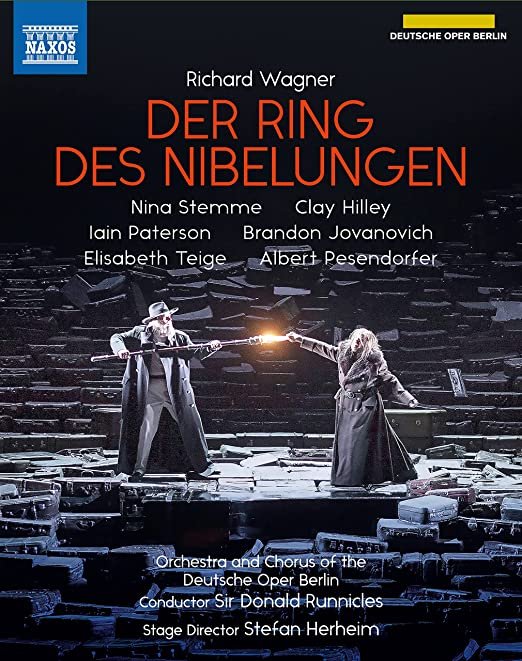
Wagner Der Ring des Nibelungen opera cycle directed by Stefan Herheim in 2021 at the Deutsche Oper Berlin. Sir Donald Runnicles directs the Orchestra and Chorus of the Deutsche Oper Berlin. Set designs by Silke Bauer and Stefan Herheim; costumes by Uta Heiseke; lighting by Ulrich Niepel; video projections by Torge Moller, William Duke, and Dan Trenchard; dramaturgy by Alexander Meier-Dörzenbach and Jörg Königsdorf. Directed for TV by Götz Filenius. Sung in German. Released 2020, this is a box set of 4 Blu-ray discs with the entirety of the Ring and extras. Grade: D
See the artwork for the back of the box set above for some additional information (this is a cropped image from the DVD box, but the information will be the same for the Blu-ray box).
Preliminary reports about this project suggest that Deutsche Oper Berlin did not have the valkyriepower to pull this off. The marketing of this by Naxos and the vendors is as atrocious as anything I have seen . . .
Grigory Sokolov at Esterházy Palace concert. Sokolov plays three Haydn sonatas, 5 Schubert Impromptus, and encores. Released 2022, this title includes 2 CD sound-only recordings plus a Blu-ray disc. The Blu-ray disc has a video of the concert (lasts 2 hours) directed by Nadia Zhdanova. The full concert is as follows:
Haydn Piano Sonata No. 32
Haydn Piano Sonata No. 47
Haydn Piano Sonata No. 49
Schubert Impromptus 1-4 from D. 935
Schubert Impromptu 4 from D. 899 (encore)
Rameau Le rappel des oiseaux (encore)
Schubert Hungarian Melody (encore)
Chopin Prelude No. 15 “Raindrop” (encore)
Griboyedov Waltz in E minor (encore)
Debussy Des pas sur le neige (encore)
The blu-ray disc has 5.1 dts-HD Master Audio sound. Grade: A+
Sokolov is a Russian who is mostly interested in solo live piano recitals, which he performs usually on tour . . .