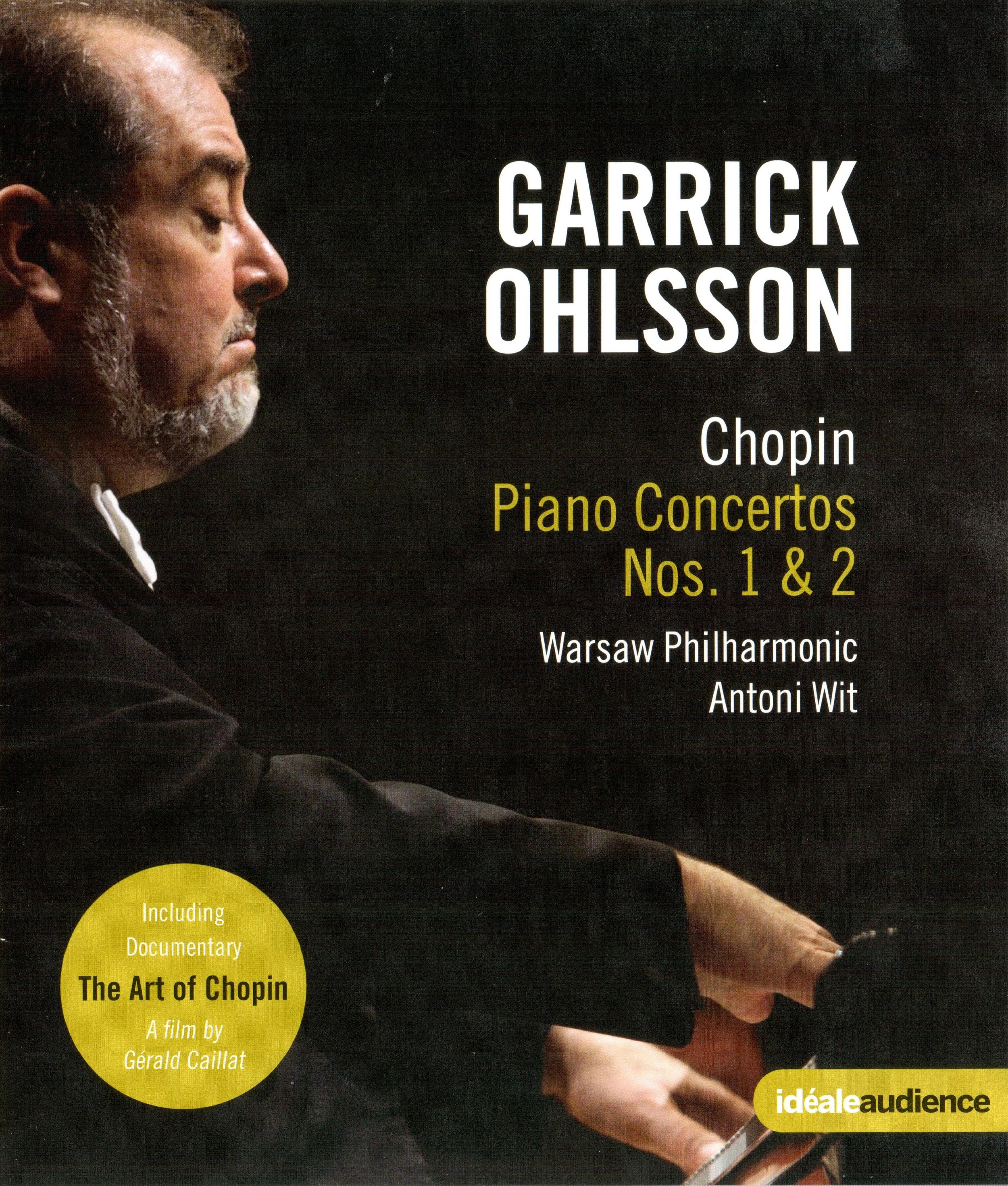
Chopin Piano Concertos 1 & 2


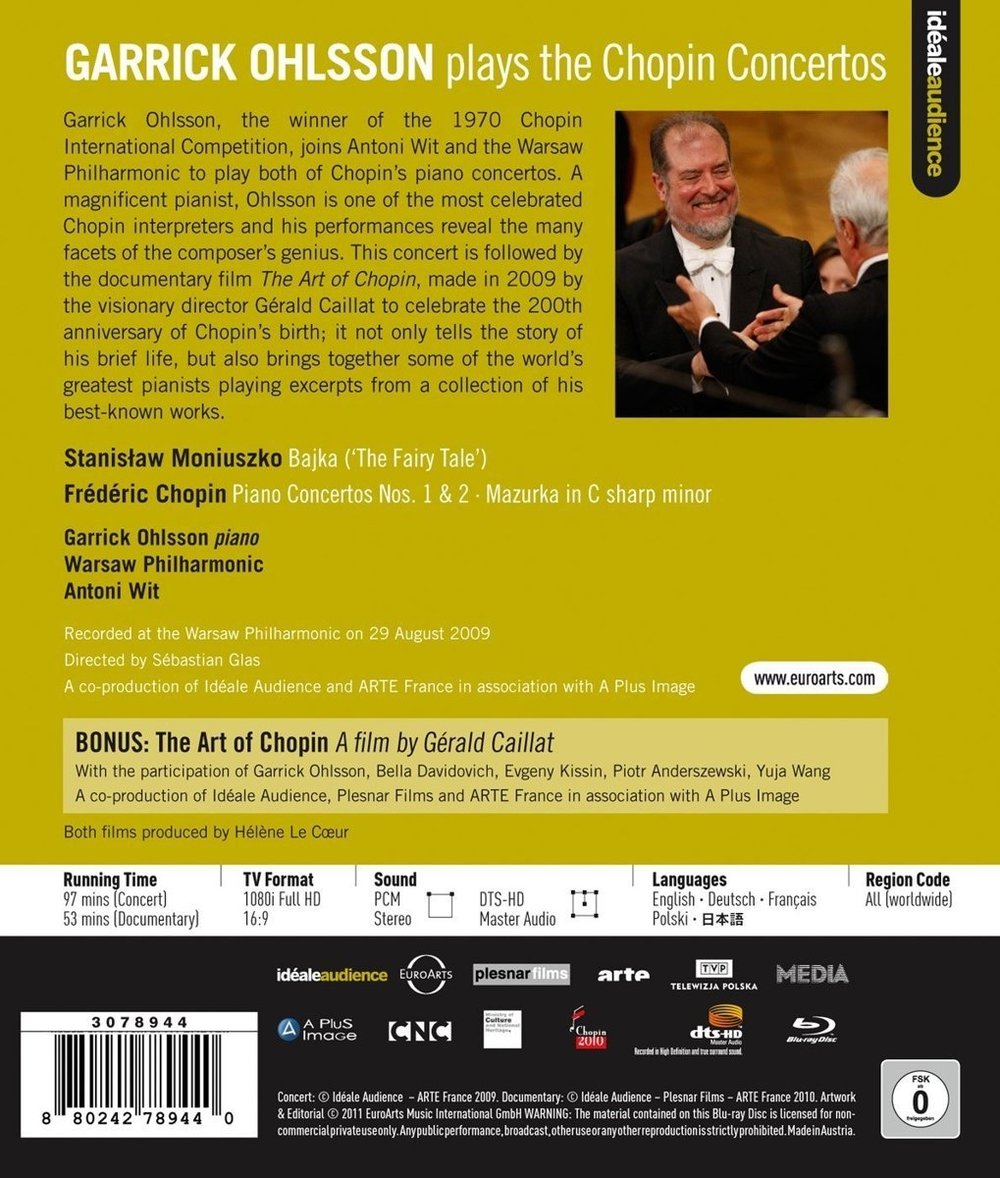
This 2009 Chopin piano concertos program has the following music:

  • The Warsaw Philharmonic Orchestra plays Bajka (Fairy Tale) by Stanisław Moniuszko.

  • Garrick Ohlsson plays the Chopin Piano Concerto No. 1

  • Ohlsson plays the Chopin Piano Concerto No. 2

  • Ohlsson plays as encore the Chopin Mazurka in C sharp minor

In addition, the disc has a 53-minute documentary, The Art of Chopin: A Film by Gérald Caillat.

 Antoni Wit conducts the Warsaw Philharmonic Orchestra at the Warsaw Philharmonic Hall. Directed for TV by Sébastian Glas; photography was directed by Thierry Houlette; sound was recorded and edited by Andrzej Sasin. Produced by Hélène Le Cœur. Released 1011, disc has 5.1 dts-HD Master Audio sound. Grade: C+

Let's start with comments that apply to the entire live performance. Thanks to Andrzej Sasin, sound quality throughout is competitive with most of the better HDVDs coming out now (other than audiophile recordings from publishers like NHK and AIX). Picture quality, however, is sub-par with poor resolution, a grainy appearance, color balance making folks look a bit too pink, and some motion artifacts. But what really drags this title down is amateurish video content, which we will discuss in detail.

Bajka (Fairy Tale)

We have commented often on our standards for a good HDVD of a symphony performance. The basic idea is to use the power of high-definition cameras to make video images showing much or all of the orchestra and Alas, so many YT clips: so few worth watching.to move in for close-up shots only when there are good reasons. This gives the viewer an experience similar to a spectator at a live performance enhanced with a reasonable number of close-up shots. You can't do this with low-resolution DVD pictures. DVDs therefore tend to present a long string of cuts from one close-up to another in a manner often reminiscent of a cartoon chase. Too often the TV director shoots a DVD and it gets published also as an HDVD because the producer doesn't know how an HDVD should look. When this happens,  we will call it to your attention.

The Bajka video is pure DVD. In about 14 minutes there are 155 cuts (that's a lot of action). There are 47 shots of the conductor and 26 close-up shots of instruments only — typical DVD fare. Most of the rest of the show is a  series of back-and-forth views from the conductor to the ghostly instruments, to soloists, or to small groups of players.  No attention is given to sections in the orchestra. There are only a few attempts to show most or a substantial part of the band. Most of these shots are from the side showing the backs of many musicians.

Alas, so many YT clips: so few worth watching.Because the action is so fast paced, the cameramen don't have time to set up their shots well. There's an astonishing number of shots with framing, focus, and field-of-focus issues. See for examples :41 where the camera is too low. In :53, 5:06, and 5:21 see framing and focus problems. At 5:34 the only person in focus is not playing while all the persons playing are out-of-focus.  The most dumbfounding shots are 2:02, 2:21, and 2:30 where the center of attention is the back of a music stand. All this video mayhem taxes the viewers' minds and interferes with appreciation of the music. The grade for this Bajka segment, were we to give one, would have to be a F.

Piano Concerto No. 1

This is another pure DVD. There were only 3 brief efforts during this concerto to show the whole orchestra, and at least of them is ruined because the camera was too low. There are a few part-orchestra shots, mostly made from the side showing the backs of many players. We noted only one effort to shoot any strings as a section. Then there is a flabbergasting 295 shots of the soloist (sometimes with 2 or 3 different views in one keyboard run). There are way too many shots of the conducAlas, so many YT clips: so few worth watching.tor (many made over the backs of the orchestra). The conductor shots are used as a hub with spokes out to solos, ghost instruments without visible players, and small groups of musicians. There are many views with gross framing, focus, and field-of-focus errors; see examples at 17:10, 25:09, 25:12, 25:30, 20:31, 29:37, 42:43, 53:28. At 23:12 and 23:31 there were even shots of the conductor's belly.

All this is a bit of a tragedy because Ohlsson's performance is so smooth, elegant, and flawless. He is more animated than and more graceful than Barenboim in his recent HDVD readings of Concerto No. 1.

Piano Concerto No. 2

The video content on this track is pretty much the same as on the recording of Concerto No. 1. There is no whole-orchestra shot at all. The pace of cuts is somewhat slowed, but there is still way too much going on to distract the viewer.

The Art of Chopin: A Film by Gérald Caillat

Alas, so many YT clips: so few worth watching.This is a pleasant presentation of Chopin's career with tons of legacy and modern footage of Ohlsson and other famous pianists chopining. It adds something of value to this otherwise disappointing disc.

Let's sum up.  It's sad that we now have 3 HDVDs of the Chopin concertos, but none of the discs do justice to the artists who performed. Now that we have high-definition TV, we have the ability to produce wonderful new video recordings. But the industry must learn how to use the high-definition cameras properly and leave behind bad DVD habits.

Both Ohlson performances had the potential for A+grades. But bad PQ and miserable video content knock this disc down two grades. The nice documentary offsets the total-loss Bajka number. So we wind up with the grade of C+.
The Nutcracker

The Nutcracker ballet. Music by Pyotr Ilyich Tchaikovsky. Libretto and choreography by Yuri Grigorovich with ideas from Marius Petipa. Filmed in 2010 at the Bolshoi Ballet. Stars Nina Kaptsova (Marie), Artem Ovcharenko (The Nutcracker Prince), Denis Savin (Drosselmeyer), Alexey Loparevich (Stahbaum), Olga Suvorova (Mrs. Stahlbaum), and Pavel Dmitrichenko (Mouse King). Pavel Klinichev conducts the Bolshoi Theatre Orchestra and Children Chorus. Set and costume design by Simon Virsaladze; lighting design by Mikhail Sokolov; directed for TV by Vincent Bataillon; produced by François Duplat. Released 2011, disc has 5.1 dts-HD Master Audio sound. Grade: F

This recording was made about the time a massive, years-long renovation of the Bolshoi Theater was winding down. During this time the Bolshoi Ballet stayed in operation,  but it would appear the renovation project adversely affected current performances. In this Nutcracker, the star dancers perform well. But in every other way, this title is a dismal disappointment.

Read More

Adriano in Siria

Giovanni Battista Pergolesi Adriano in Siria opera. Directed 2010 by Ignacio García at the Teatro G. B. Pergolesi in Jesi, Italy.  Stars Marina Comparato (Adriano), Lucia Cirillo (Emirena), Annamaria dell’Oste (Farnaspe), Nicole Heaston (Sabina), Stefano Ferrari (Osroa), Francesca Lombardi (Aquilio Tribuno) , Monica Bacelli (Livietta), and Carlo Lepore (Tracollo). Ottavio Dantone conducts the Accademia Bizantina. Set design by Zulima Memba del Olmo; costume design by Patricia Toffolutti; lighting design by Ignacio Garcia and Fabrizio Gobbi. Directed for TV by Tiziano Mancini; produced for Blu-ray by James Whitbourn. Released 2011, disc has 5.1 dts-HD Master Audio sound. Grade: NAGiovanni Battista Pergolesi Adriano in Siria opera. Directed 2010 by Ignacio García at the Teatro G. B. Pergolesi in Jesi, Italy.  Stars Marina Comparato (Adriano), Lucia Cirillo (Emirena), Annamaria dell’Oste (Farnaspe), Nicole Heaston (Sabina), Stefano Ferrari (Osroa), Francesca Lombardi (Aquilio Tribuno) , Monica Bacelli (Livietta), and Carlo Lepore (Tracollo). Ottavio Dantone conducts the Accademia Bizantina. Set design by Zulima Memba del Olmo; costume design by Patricia Toffolutti; lighting design by Ignacio Garcia and Fabrizio Gobbi. Directed for TV by Tiziano Mancini; produced for Blu-ray by James Whitbourn. Sung in Italian. Released 2011, disc has 5.1 dts-HD Master Audio sound. Grade: NA

Read More

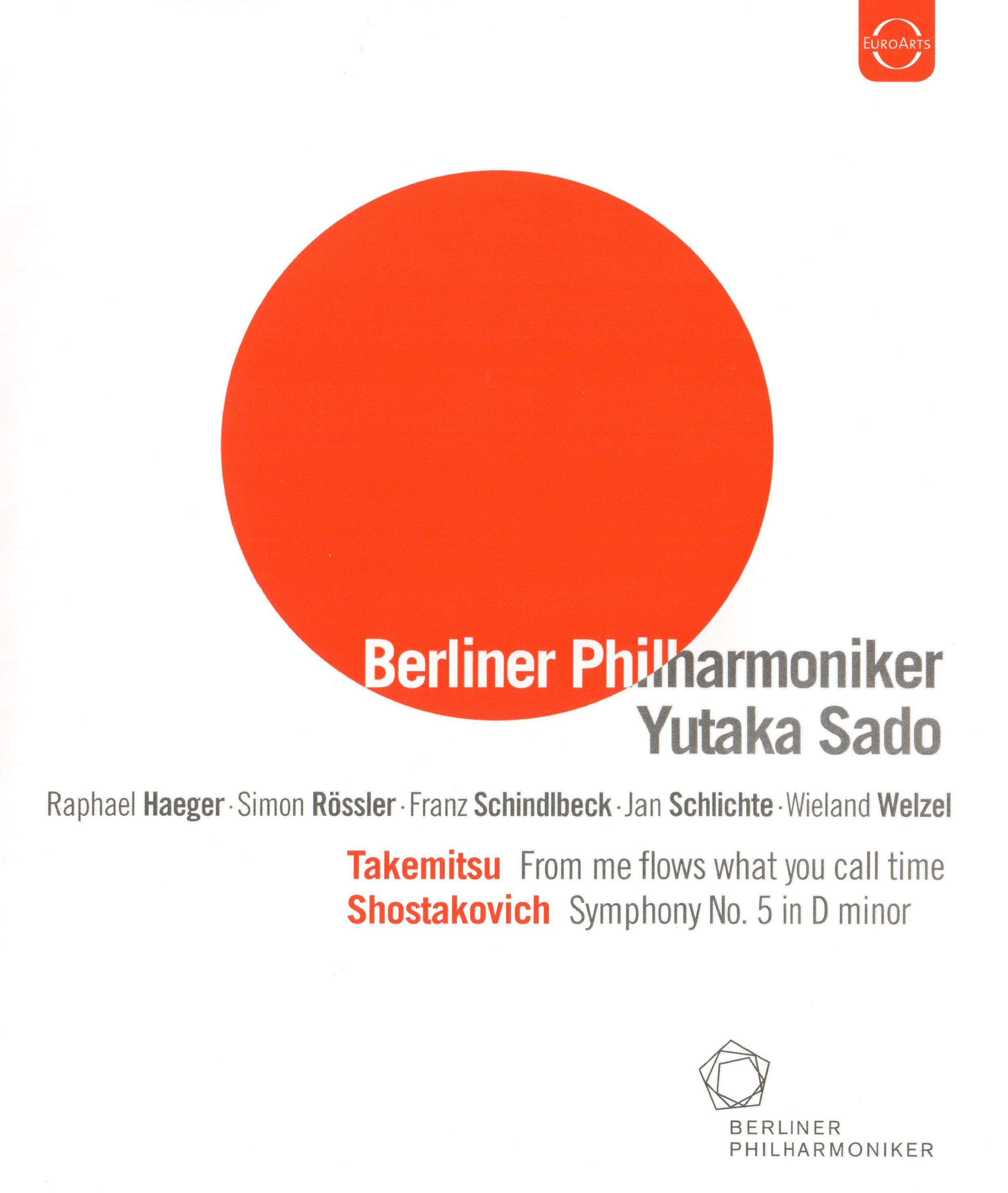
Takemitsu From me flows what you call time and Shostakovitch Symphony No. 5


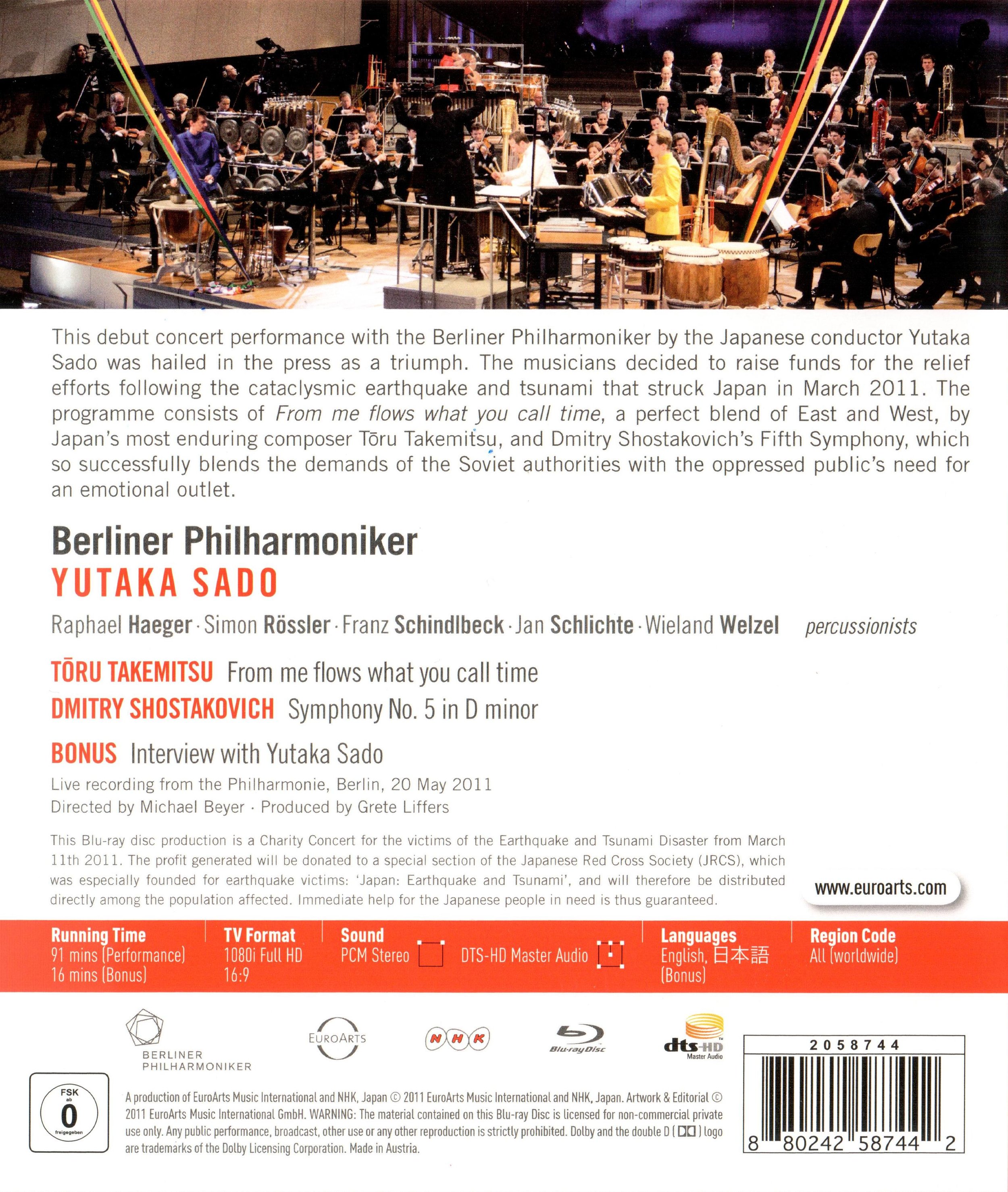
Takemitsu From me flows what you call time and Shostakovitch Symphony No. 5. Yutaka Sado conducts his debut with the Berliner Philharmoniker in 2011 at the Berlin Philharmonie.  The Takemitsu piece features the entire percussion section of the Philharmoniker:  Raphael Haeger, Simon Rössler, Franz Schindlbeck, and Jan Schlichte with Wieland Welzel (one of the timpani players). Directed for TV by Michael Beyer; produced by Grete Liffers. Released in 2011, disc has 5.1 dts-HD Master Audio sound. Grade: B+ for Takemitsu  Grade: C+ for Shostakovich

This was a special performance to raise relief funds for the people of Japan following the earthquakes and tsunami of March 2011. So this was a special recording put together quickly for a topical reason. The HD resolution is a bit soft and the color a bit washed out. The sound is acceptable.

Not many Westerners are familiar with the music of Takemitsu. But readers of this website know about his My Way of Life staged concert spectacular, which was presented in Berlin by the Staatskapelle in 2004. Also, if you have seen many Japanese motions pictures, you may know more about Takemitsu than you realize because Takemitsu was Japan's leading composer of film scores and wrote the music for many of the most famous Japanese movies.

From me flows what you call time was scored for a large variety of Eastern percussion instruments backed up by a symphony orchestra. Some of the percussion instruments look pretty exotic; others look exactly like the wind chimes hanging from the eave of my back porch. The percussionists  wear special colorful coats and there are other props that make this performance unique.

Different batteries of percussion instruments are located throughout the stage. This means the seating of the orchestra gets chopped up in an unusual way. Normally we look for video content in a symphony HDVD that features  large scale shots of the orchestra and its major sections. But because the orchestra here is in the background and fragmented geographically on the stage, throw out the usual rules. Here the video consists mostly of close-ups of the 5 percussionists, a few orchestra soloists, and the conductor. Fortunately, Yutaka Sado is a fun conductor to watch.

The music is fascinating and easy to enjoy. Still, much of this would be lost in sound recording only; it's strikingly (pardon pun) beautiful on HDVD. Most classical music lovers would find this recording enjoyable; viewers with an interest in percussion music might consider this a "must have" recording. So I wind up with the grade of B+ for From me flows what you call time.

The Philharmoniker picked the Shostakavich Symphony No. 5 to finish out the program probably because it is a modern Western piece written in response to extremely daunting public events in the life of the composer. Yutaka Sado states in the bonus feature that he hears this piece differently (following the Japanese tsunami) in that it now "reminds me to pray." Sado also relates in the bonus that he first formed the ambition to conduct the Berlin Philharmoniker when he was 11 years old. This explains the tremendous emotion displayed by Sado as he conducts the Philharmoniker for the first time in his career.

Sado gets more emotion from his players than most other conductors with big dynamic changes along with wonderful soloist and section playing. Sado is a tall, strapping, cheerful man who leaps in the air (like an athlete blocking a shot) when he orders the percussionist to hit the bass drum as hard as he can. It could be dangerous to let this guy down, so the Berlin players respond with explosions of panache. During the final applause, the members of the orchestra first seem to be affected by a bit of shock and awe, but after a few moments, they start clapping for each other.

But, alas, this excellent performance is not matched by the PQ, SQ, or video content of the title. We  already noted the soft picture and unremarkable sound. But the real problem is that this disc has a case of DVDitis. The cameras are constantly in motion moving from the conductor (including many shots made over the backs of the musicians) to soloists and small groups. Between cuts there is excessive panning and zooming. As mention earlier, the DVD approach is probably appropriate for the percussion extravaganza, but it sinks the Shostakavich symphony. With weaknesses in PQ, SQ, and video content, we would normally have to give a low grade; because of the enthusiasm of the performance, we arrive at C+.

Next below is a neat video from this performance:

Le nozze di Figaro

Mozart Le nozze di Figaro opera to libretto by Lorenza da Ponte. Directed 2009 by Emilio Sagi at the Teatro Real. Stars singers Ludovic Tézier (Count Almaviva), Barbara Frittoli (Countess Almaviva), Luca Pisaroni (Figaro), Isabel Rey (Susanna), Marina Comparato (Cherubino), Jeannette Fischer (Marcellina), Carlos Chausson (Bartolo), Raúl Giménez (Basilio), Enrique Viana (Don Curzio), Soledad Cardoso (Barbarina), and Miguel Sola (Antonio). Stars dancers Remei Domingo, Damián Donado, Mª Ángeles Fernández, Pedro Fernández, Francisco Guerrero, Antonio Hidalgo, Olivia Juberías, Silvia Martín, Pedro Navarro, Susana Serrano, Jorge Vicedo, and Rosa Zaragoza. Also features extras Ana Urbano and Candela Valentín-Gamazo. Jesús López Cobos conducts the Corus and Orchestra of the Teatro Real and the Madrid Symphony Orchestra and Chorus (Chorus Master Peter Burian). Harpsichord continuo: Patricia Barton; cello continuo: John Paul Friedhoff. Set design by Daniel Bianco; costume design by Renata Schussheim; lighting design by Eduardo Bravo; choreography by Nuria Castejón; produced by Ángela Álvarez Rilla. [Mystery: who directed the recording of this for TV?] Released in 2011, disc has 5.1 dts-HD Master Audio sound. Grade: NA


Read More

La Traviata (Petersen)

Verdi La Traviata opera to a libretto by Francesco Maria Piave. Directed 2011 at the Oper Graz by Peter Konwitschny. Stars Marlis Petersen (Violetta Valéry), Kristina Antoine Fehrs (Flora Bervoix), Fran Lubahn (Annina), Giussepe Varano (Alfredo Germont), James Rutherford (Giorgio Germont), Taylan Memioglu (Gastone), Ivan Oreščanin (Barone Douphol), David McShane (Marchese d'Obigny), Konstantin Sfiris (Dottor Grenvil), Juraj Hurny (Giuseppe), Richard Jähnig (Commissionario), and Theresa Wakonig (Sorella di Alfredo). Tecwyn Evans conducts the Grazer Philharmonisches Orchester and the Chrous and Supernumeries of the Oper Graz (Chorus Master Bernhard Schneider). Set and costume design by Johannes Leiacker; dramaturgy by Bernd Krispin and Bettina Bartz; lighting design by Joachim Klein. Directed for TV by Myriam Hoyer. Sung in Italian. Released 2011, disc has 5.0 dts-HD Master Audio sound. Grade: D

Read More

Die Liebe der Danae

Strauss Die Liebe der Danae opera to a libretto by Joseph Gregor after Hugo von Hofmannsthal. Directed 2011 at the Deutsche Oper Berlin by Kirsten Harms. Stars Manuela Uhl (Danae), Mark Delavan (Jupiter), Matthias Klink (Midas), Thomas Blondelle (Merkur), Bukhard Ulrich (Pollux), Hulkar Sabirova (Xanthe), Paul Kaufmann, Clemens Bieber, Nathan De'Shon Myers, Hyung-Wook Lee (Four Kings), Hila Fahima (Semele), Martina Welschenbach (Europa), Julia Benzinger (Alkmene), and Katarina Bradić (Leda). Andrew Litton conducts the Orchestra and Chorus of the Deutsche Oper Berlin (Chorus Master William Spaulding). Stage design by Bernd Damovsky; costume design by Dorothea Katzer; lighting design by Manfred Voss; dramaturgy by Andreas K. W. Meyer. Directed for TV by Myriam Hoyer. Released 2011, disc has 5.0 dts-HD Master Audio sound. Grade: NA


Read More

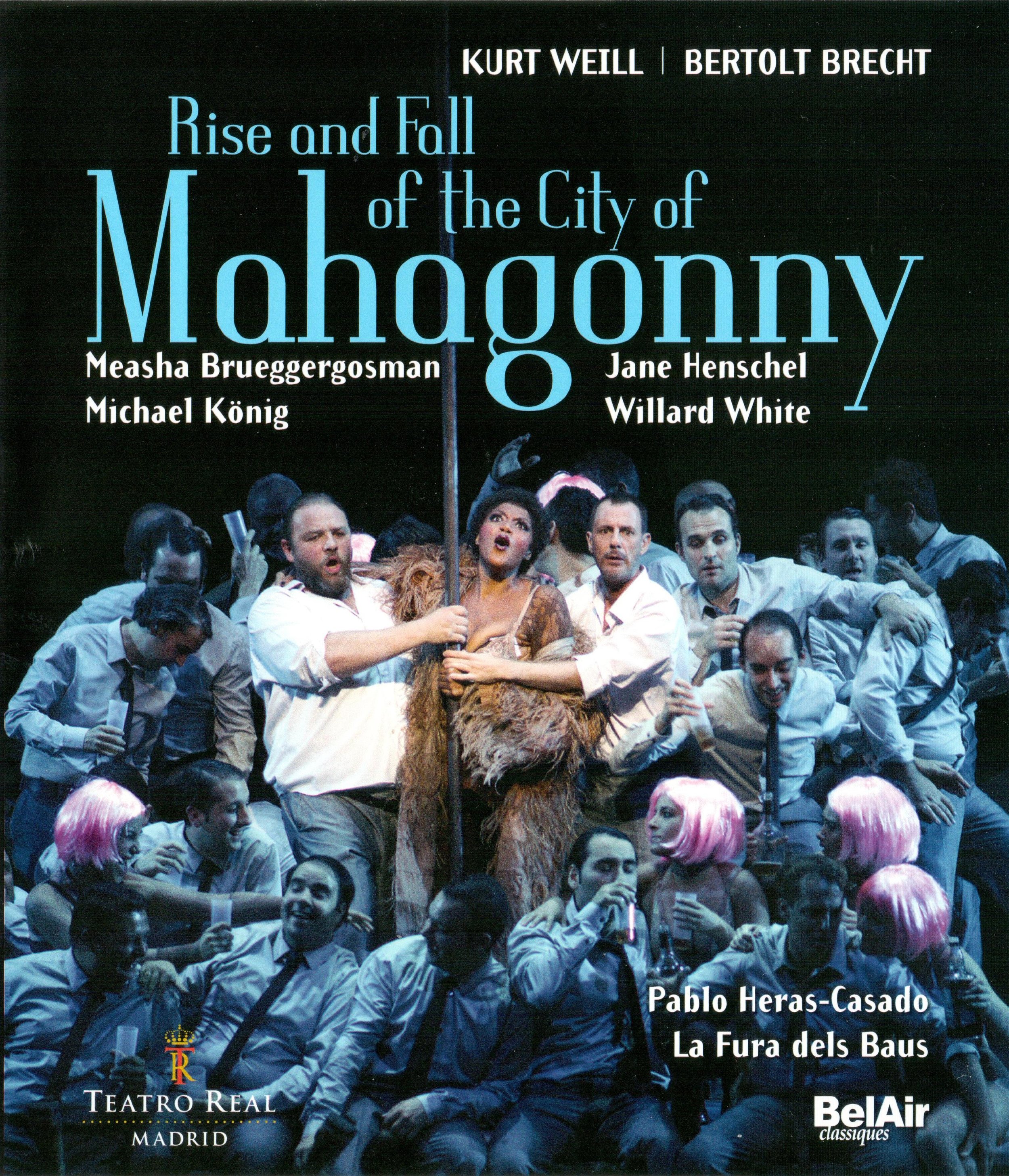
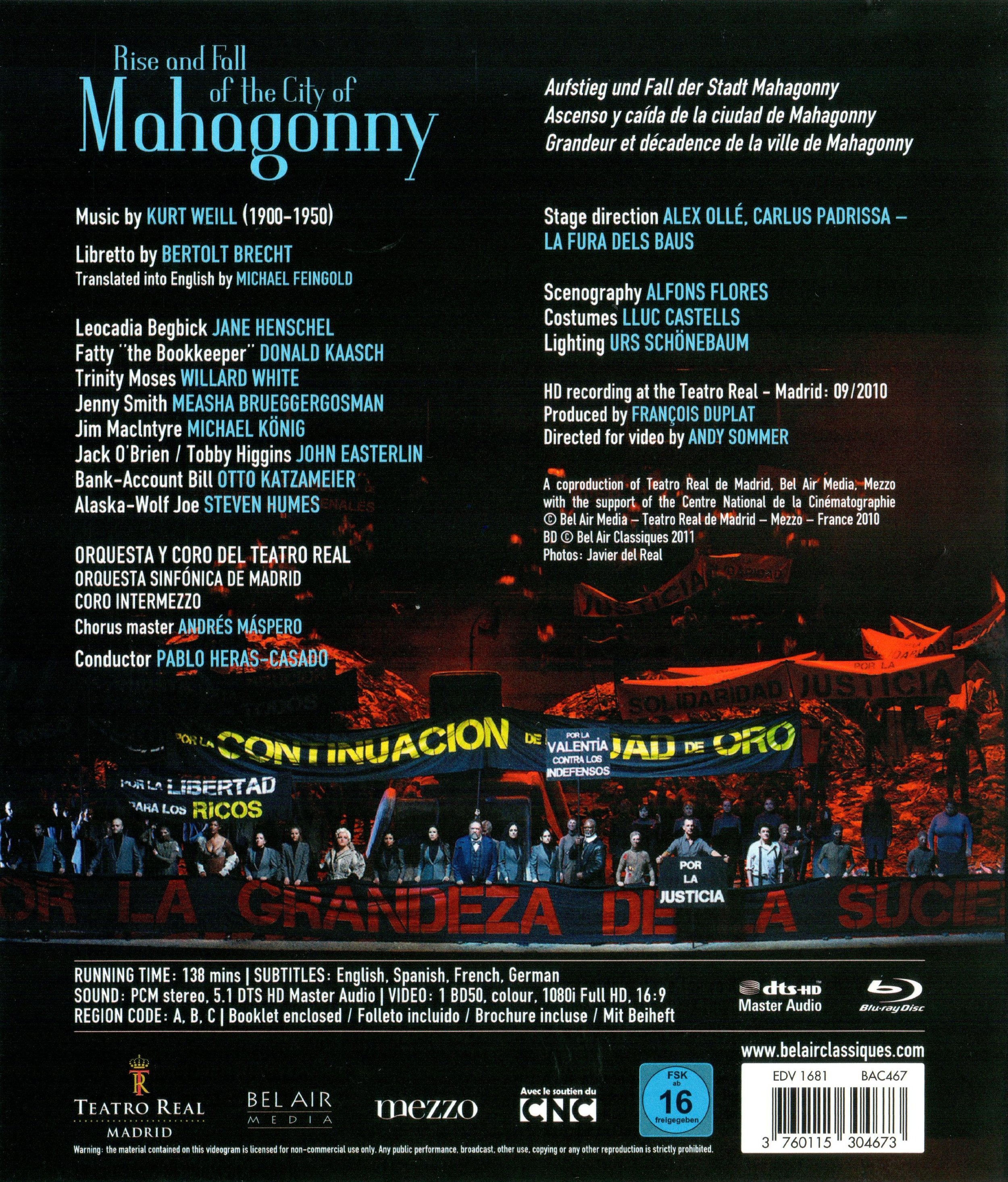
Rise and Fall of the City of Mahagonny


Kurt Weill Rise and Fall of the City of Mahagonny opera to libretto by Bertolt Brecht. Directed 2010 at the Teatro Real by Alex Ollé and Carlus Padrissa of La Fura Dels Baus. Stars Jane Henschel (Leocadia Begbick), Donald Kaasch (Fatty "the bookkeeper"), Willard White (Trinity Moses), Measha Brueggergosman (Jenny Smith), Michael Köning (Jim MacIntyre), John Easterlin (Jack O'Brien/Tobby Higgins), Otto Katzameier (Bank-Account Bill), and Steven Humes (Alaska-Wolf Joe). Pablo Heras-Casado conducts the Orquesta y Coro del Teatro Real, Orquesta Sinfónica de Madrid, and the Coro Intermezzo (Chorus master Andrés Máspero). Sceneography by Alfons Flores; costumes by Lluc Castells; lighting by Urs Schönebaum. Directed for TV by Andy Sommer; produced by François Duplat.  The original German text by Brecht was translated into English by Michael Feingold, and this is sung in English! There are subtitles in English, Spanish, French, and German. We assume the German subtitles would be the original text from Brecht. 16-year old Released 2011, disc has 5.1 dts-HD Master Audio sound. Grade: NA

Here's an official YT clip:

OR

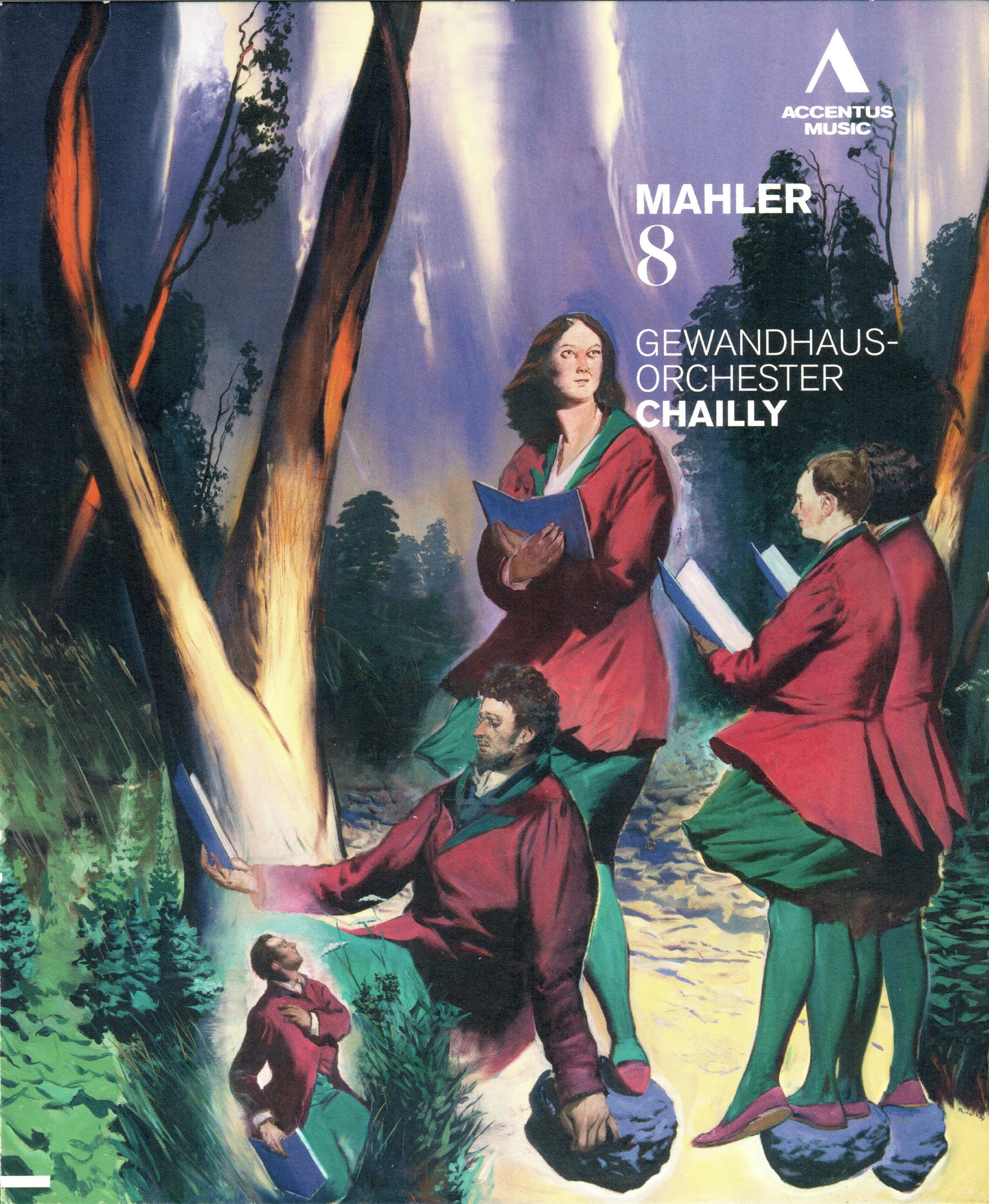
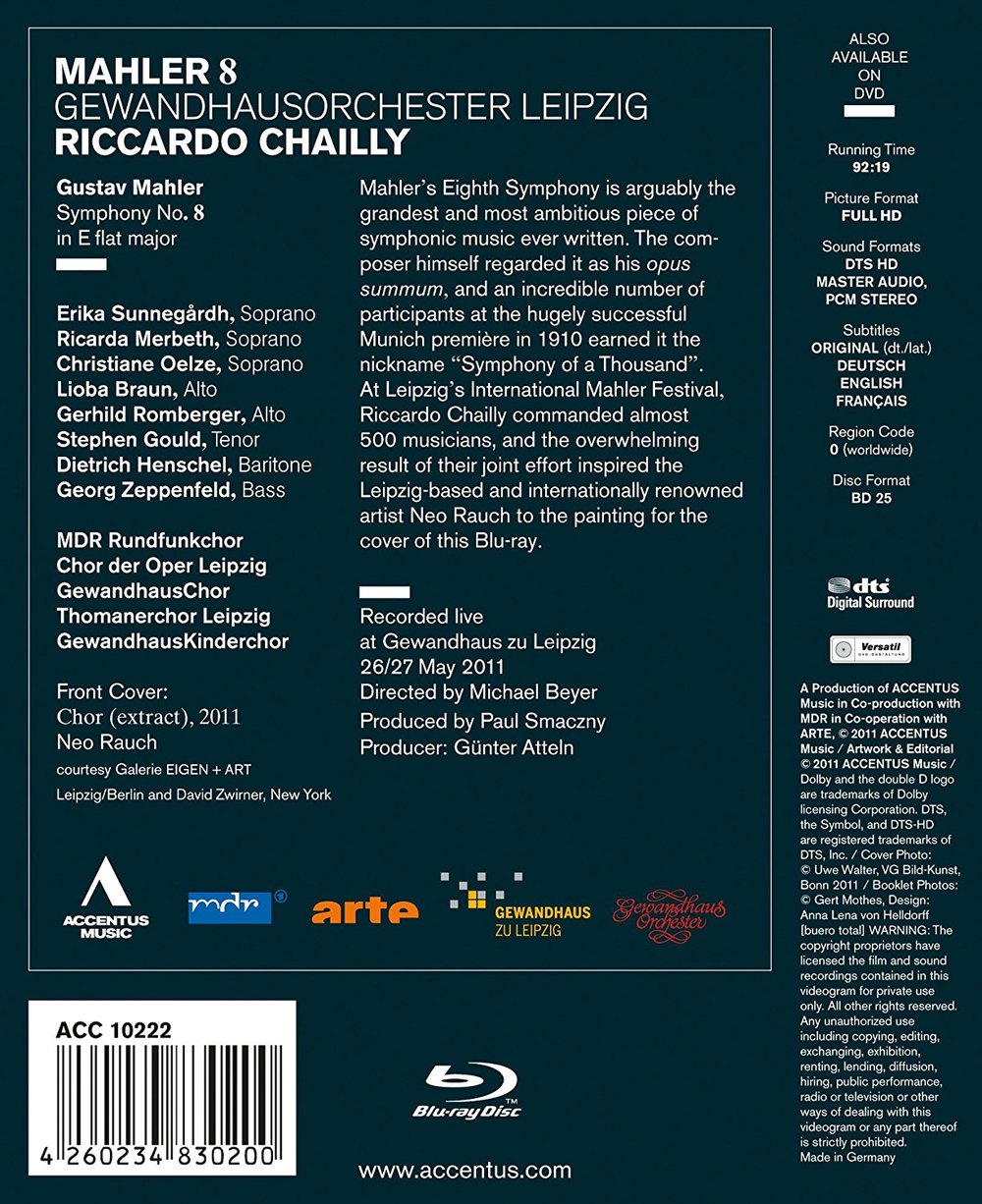
Mahler Symphony No. 8 "Symphony of a Thousand"


Mahler Symphony No. 8 ("Symphony of a Thousand"). Riccardo Chailly conducts 2011 the Gewandhausorchester Leipzig as well as the MDR Rundfunkchor, the Chor der Oper Leipzig, the GewandhausChor, the Thomanerchor Leipzig, and the GewandhausKinderchor (Chorus Masters Howard Arman, Georg Christoph Biller, Frank-Steffen Elster, Gregor Meyer, and Volkmar Olbrich). Soloists are Erika Sunnegårdh (soprano), Ricarda Merbeth (soprano), Christiane Oelze (soprano), Lioba Braun (alto), Gerhild Romberger (alto), Stephen Gould (tenor), Dietrich Henschel (baritone), and Georg Zeppenfeld (bass). Directed for TV by Michael Beyer; produced by Paul Smaczny. Released 2011, disc has 5.1 dts-HD Master Audio sound. Grade: NA

Here's an official clip saturated with DVDitis:

OR

Ravel Piano Concerto in G and Romeo and Juliet Suites 1 & 2

This is a concert given in 2009 at the Nobel Prize festivities. Yuri Temirkanov conducts The Royal Stockholm Orchestra. Martha Argerich is solo pianist. The following music is performed:

  •  Shostakovich Festive Overture

  •  Ravel Piano Concerto in G major (the one with 2 hands)

  •  Chopin Mazurka in C major

  •  Prokofiev Suite No. 2 from Romeo and Juliet (excerpts)

  •  Prokofiev Suite No. 1 from Romeo and Juliet (excerpts)

Produced by Paul Smaczny and Camilla Hyltén-Cavallius; directed for TV by Michael Beyer. Released 2011, disc has 5.1 dts-HD Master Audio sound. Grade: D


Read More

Beethoven: The Complete Symphonies

Beethoven: The Complete Symphonies. This is a Box Set of all 9 Beethoven symphonies played by the Wiener Philharmoniker as conducted by Christian Thielemann. There are also  documentaries for each symphony. These titles were released earlier as follows:

1. Beethoven Symphonies 1-3 (Grade: B-)

2. Beethoven Symphonies 4-6 (Grade: C)

3. Beethoven Symphonies 7-9 (Grade: B-)

All discs have 5.0 dts-HD Master Audio for the music, and 2.0 stereo sound for the documentaries. 


Read More

Otello

Giuseppe Verdi Otello opera to libretto by Arrigo Boito. Directed 2008 by Stephen Langridge at the Salzburg Festival. Stars Aleksandrs Antonenko (Otello), Marina Poplavskaya (Desdemona), Carlos Álvarez (Jago), Barbara Di Castri (Emilia), Stephen Costello (Cassio), Antonello Ceron (Roderigo), Mikhail Petrenko (Lodovico), Simone Del Savio (Montano), and Andrea Porta (Herald). Riccardo Muti conducts the Wiener Philharmoniker, the Konzertvereinigung Wiener Staatsopernchor (Chorus Master Thomas Lang), and the Salzburger Festspiele Kinderchor. Stage music by the Mozarteum Orchester Salzburg. Sets by George Souglides; costumes by Emma Ryott; lighting by Giuseppe Di Iorio. Directed for TV by Peter Schönhofer. Released  2010,  disc has 5.1 dts-HD Master Audio sound. Grade: A


Read More

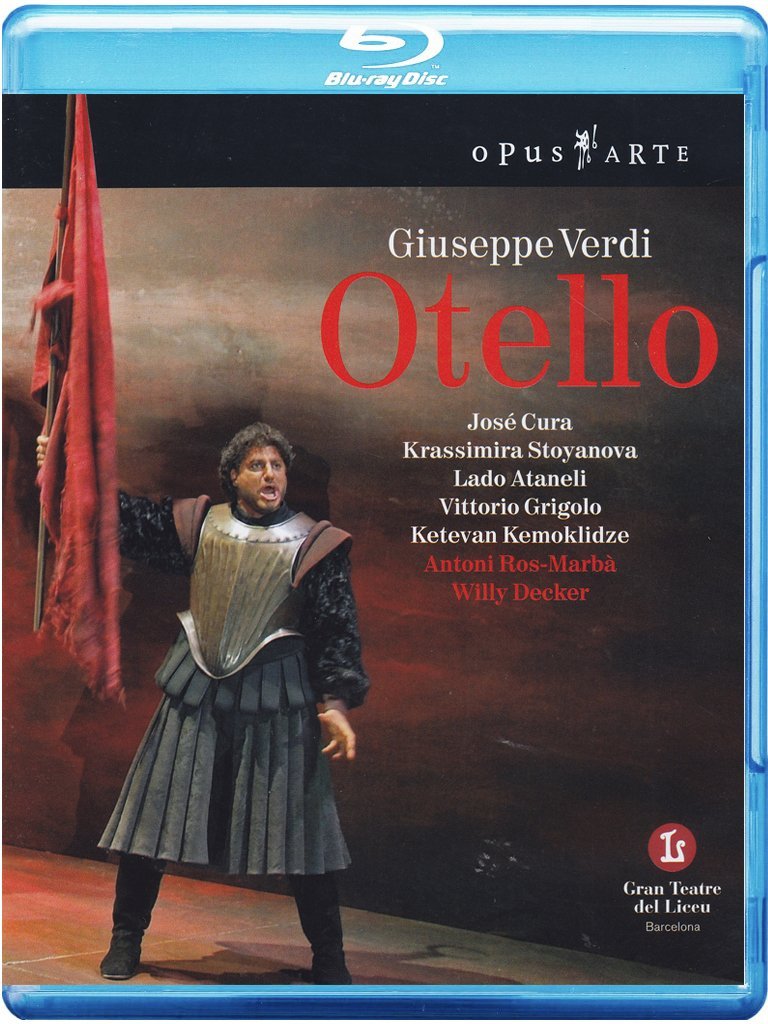
Otello


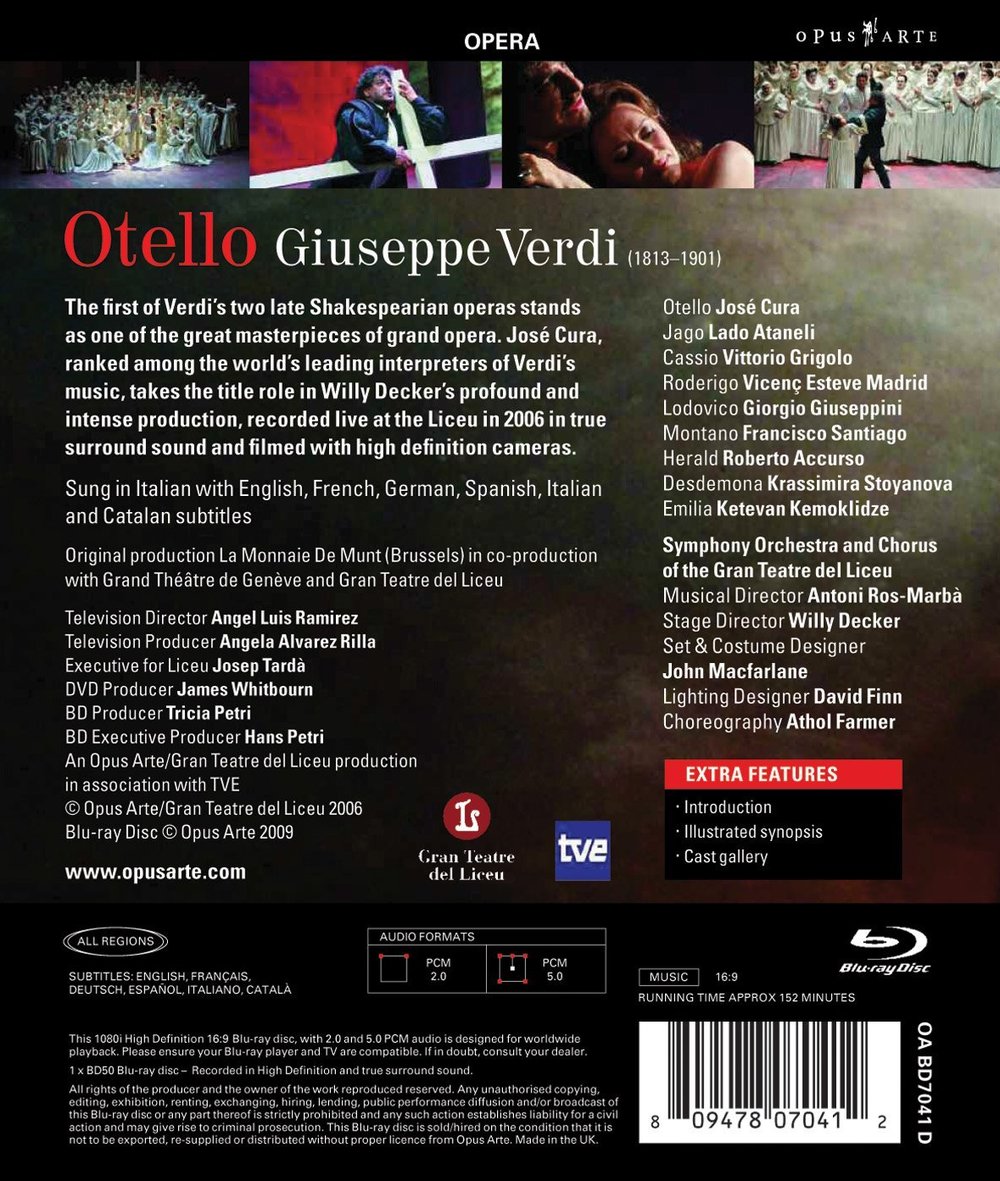
Verdi Otello opera to libretto by Arrigo Boito. Directed 2006 at the Barcelona Gran Teatre del Liceu with François de Carpentries and Joan Antón Rechi re-staging a production by Willy Decker. Stars José Cura (Otello), Krassimira Stoyanova (Desdemona), Lado Ataneli (Iago), Vittorio Grigolo (Cassio), Ketevan Kemoklidze (Emilia), Vicenç Esteve Madrid (Roderigo), Giorgio Giuseppini (Lodovico), Francisco Santiago (Montano), and Roberto Accurso (Herald). Antoni Ros-Marbà (assisted by Maiku Shibata) conducts the Symphony Orchestra and Chorus of the Gran Teatre del Liceu (Chorus Master José Luis Basso).  Set and costumes by John Macfarlane with assistant set designer Bettina Neuhaus and assistant costume designer Silvia Hasenclever; lighting by David Finn with Andreas Grüter; choreography by Athol Farmer. Directed for TV by Angel Luis Lamirez; TV Producer was Angela Alvarez Rila. Sung in Italian. Released  2009, disc has has 5.0 PCM sound. Grade: B

We watched this one time and felt that it is a B title. Print critics have been lukewarm to this production also.

OR

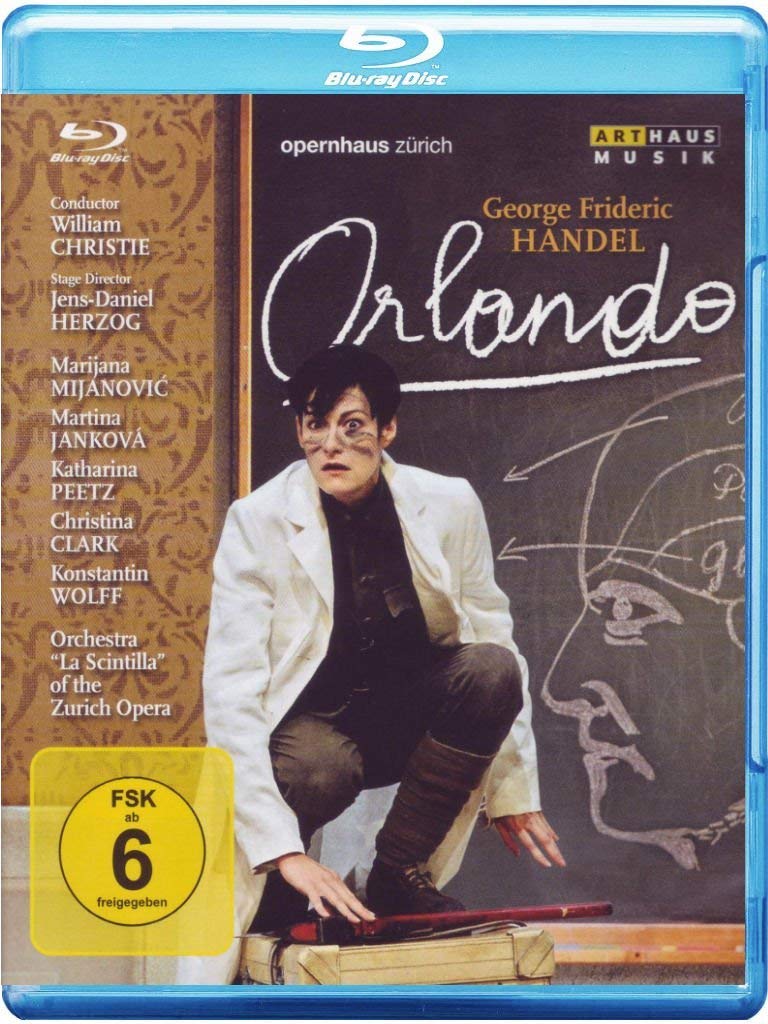
Orlando


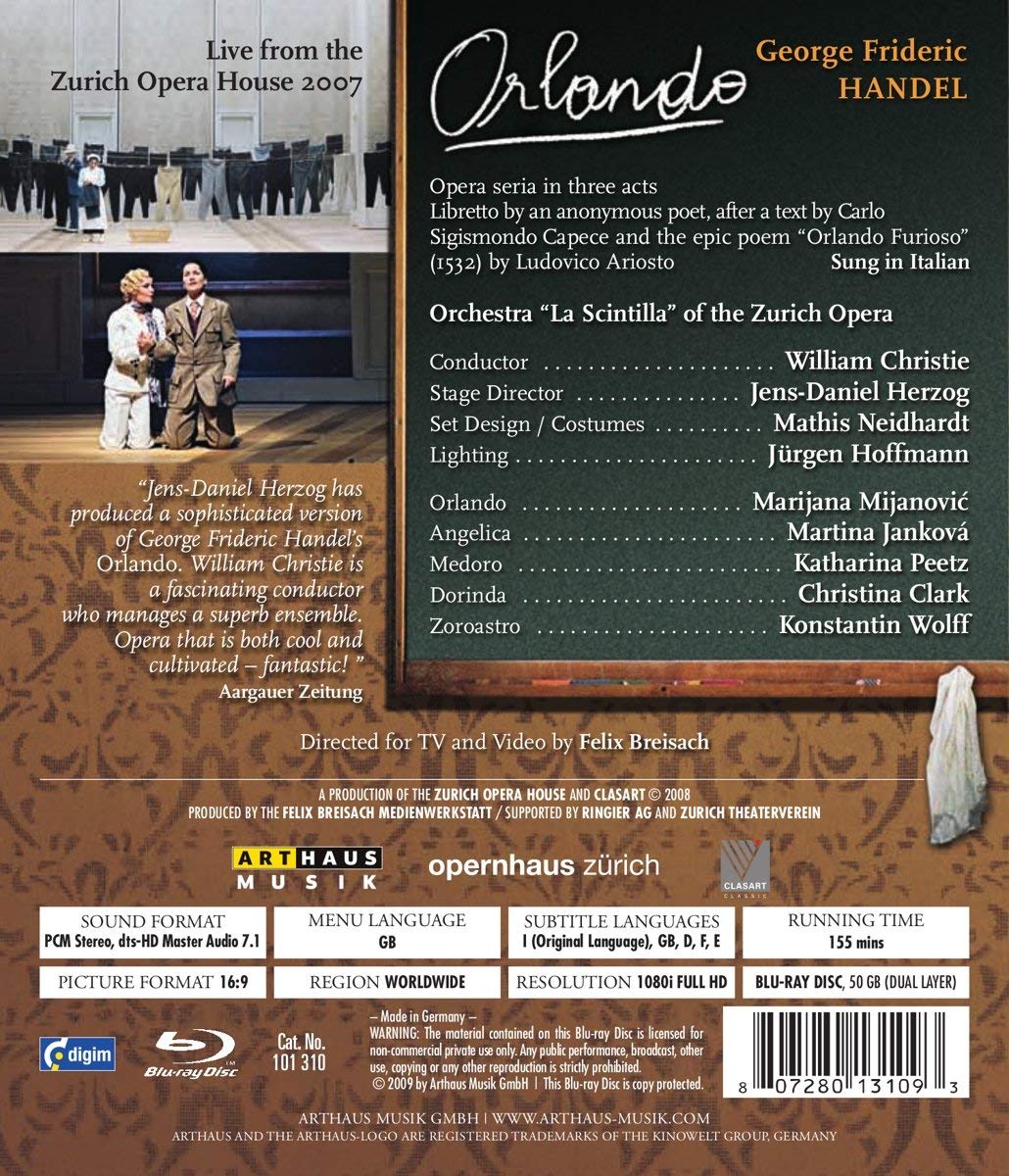
Handel Orlando to libretto by an anonymous poet. Directed 2007 by Jens-Daniel Herzog at the Zurich Opera House. Stars Marijana Mijanović (Orlando), Martina Janková (Angelica), Katharina Peetz (Medoro), Christina Clark (Dorinda), Konstantin Wolff (Zoroastro), Carmela Beetz, Simon Berger, Kristina Knauerhase, Wanda Hlubina, Martin Hallauer, Zacharias Katsas, Barbara Looser, Wolfram Schneider-Lastin, and Rico F. Valär (Genii). William Christie conducts the Orchestra "La Scintilla" of the Zurich Opera. Continuo: Brian Feehan, theorbo; Paul Carlioz, cello; Benoît Hartoin, cembalo; Dieter Lange, contrabass; Karen Opgenorth and Nada Anderwert, viola d'amore. Sets and costumes by Mathis Neidhardt; lighting by Jürgen Hoffmann. Directed for TV by Felix Breisach. Sung in Italian. Released 2009, disc has dts-HD Master Audio 7.1 sound. Grade: A

Orlando (premiered in 1733) is perhaps one of Handel's best operas. Orlando is a great soldier in Charlemagne's army who falls in love with the pagan princess Angelica, who in turn loves another man, Medoro. Orlando's jealousy drives him to madness, and only the skill of magician Zoroastro is able to bring him back to sanity. This 2007 production from the Zurich Opera House does indeed set the story in times closer to our own --- perhaps the 20's or 30's. But what is particularly novel about the setting is that it takes place in a lunatic asylum! This approach in fact works well, apart from one or two occasions when the singers refer to their surroundings as "forests," "groves," or "grottoes." At one point it even starts snowing --- indoors. When madness is in the air, we can suppose that anything goes.

There is indeed some very fine singing from the five principals, although talent is unequally distributed. The most remarkable voice is clearly that of mezzo Marijana Mijanovic singing the title role, originally written for a castrato. Her performance is a tour de force, and there are some wonderful moments when she and Angelica (Martina Jankova) sing together, particularly in the amazing trio "Consolati o bella" at the end of act one. The other outstanding voice is Konstantin Wolff --- the "magician" Zoroastro--- who in this context becomes the mental institution's psychiatric doctor. His rich, deep bass gives him an air of mesmerizing authority, an impression emphasized by the "lectures" he gives to his staff of nurses and attendants, illustrated with diagrams and formulas drawn on a chalkboard.

The set, made up of modular, sliding walls inset with doors, a fold-down bed, the "classroom," and a fireman's cubbyhole, has an endless variety of constantly changing volume and space --- peopled by the ever-busy troupe of nurses and muscular attendants. This means that there is always something going on to offset extended passages of virtuoso baroque ornamentation during which time (and the cast) would otherwise be standing still.

The production is punctuated by impressive and surprisiSorry, no decent YT clip for this.ng visual "twists." For example, a door bursts open and we see Orlando grasping an axe (stolen from the fireman) silhouetted against a blinding light and crying out his fury, anguish, and turmoil in a masterfully sung mezzo/countertenor outburst of insanity. William Christie conducts with his usual flair, giving the music a constant impetus that makes it fresh and delicately intricate, bringing out to perfection the orchestration and sweet tones of the authentic instruments.

Picture quality and sound are both superb with images from the 7 high-definition cameras expertly edited to deliver close-up intimacy as well as plenty of long shots to reveal the stage as seen by the audience. As an introduction to Handel's operas, this would certainly be an excellent choice. It's also a fine example of how successful "updating" an opera sometimes can be.

Thanks to Wonk Gordon Smith for this review.

Parsifal

Wagner Parsifal opera to libretto by the composer. Directed 2004 by Nikolaus Lehnhoff at the Baden-Baden Festspielhaus. Stars Christopher Ventris (Parsifal), Waltraud Meier (Kundry), Matti Salminen (Gurnemanz), Thomas Hampson (Amfortas), Tom Fox (Klingsor), Bjarni Thor Kristinsson (Tuturel), Johannes Eidloth (First Knight of the Grail), Taras Konoshchenko (Second Knight of the Grail), Nina Amon (First Squire), Katharina Rikus (Second Squire), Thomas Stückemann (Third Squire), Marco Vassalli (Fourth Squire), Katharina Rikus (Voice from Heaven), Nina Amon, Abbie Furmanksy, Emma Gardner, Alexandra Lubchansky, Katharina Rikus, and Andrea Stadel (Flower Maidens) . Also stars dancers as Flower Maidens: Ute Baur, Sandra Fritz, Simina German, Sarah Kinn, Fabienne Kühn, Sandra Metzger, Iris Mündörfer, Annalena Plathe, Eveline Schwarztrauber, Juliette Van der Meer, Julia Weber, and Afanasia Zwick. Kent Nagano conducts the Deutsches Symphonie-Orchester Berlin and the Baden-Baden Festspielchor. Sets by Raimund Bauer; costumes by Andrea Schmidt-Futterer; lighting by Duane Schuler; choreography by Denni Sayers. Directed for TV  by Thomas Grimm. This is a 2 disc set. The opera lasts 3 hours and 55 minutes. There is a helpful documentary that lasts 76 minutes. Total playing time is 5 hours, 23 minutes. Released 2010,  discs have 5.1 dts-HD Master Audio sound. Grade: B

Read More